
Signs the clog is in the main line, not a fixture
A single slow drain is a branch problem. These patterns point to the main.
- More than one fixture drains slowly or backs up at the same time, especially on the lowest floor.
- The shower or tub bubbles or fills when the washing machine drains.
- A toilet flush makes a floor drain or basement fixture gurgle.
- A sewer smell comes from a basement drain or the yard near the cleanout.
- Plunging works for a minute and then the standing water returns.
- The cleanout cap, a threaded plug usually found in the yard or basement floor, has water standing right at it.
Why a bottled cleaner stalls before the real blockage
A main line is large and runs partly full. A cup of liquid poured into the toilet is diluted by the first flush and carried along the bottom of the pipe as a thin stream. Roots and paper wads sit on the sides and the crown, so the product slides under them.
Chemical openers can also sit in a stopped line and eat at fittings, and they leave a hazard for whoever opens the line afterward. Enzyme and bacterial products are slow-acting and meant for maintenance on a flowing pipe, so they do little against a line that is already stopped. If water is not moving, a mechanical tool has to reach the clog.
Match the clog to the cleaning method
The tool depends on what the blockage is made of, which is why a camera look often comes first.
| Likely blockage | What suggests it | Usual method |
|---|---|---|
| Soft buildup of paper, wipes and soap. | Gradual slowing over weeks, then a sudden stop. | A cable with a cutting head to open the center, followed by flushing. |
| Tree roots at a joint. | Repeated clogs in the same place, often after wet or dry spells. | A cutting head to remove roots, and often jetting to scour the wall. |
| Grease and scale coating the wall. | Narrowing flow that returns soon after a cable pass. | Hydro jetting to strip the wall rather than punch a hole through it. |
| Bellied or sagging section. | Standing water that never drains out, even after clearing. | A camera look, then a repair discussion, since cleaning cannot fix a low spot. |
| Broken or collapsed pipe. | Sudden stop and a cable that cannot pass a certain point. | A camera inspection, then a repair plan. |
Cleaning opens the pipe. It does not fix its shape, and a camera is the only way to tell the difference.
What a professional main line clearing looks like
The visit follows the same logic regardless of the tool, and the order matters.
- Find the access pointA cleanout fitting outside or in the basement is the cleanest way in. Without one, the work may start through a toilet or a roof vent, which is slower and messier.
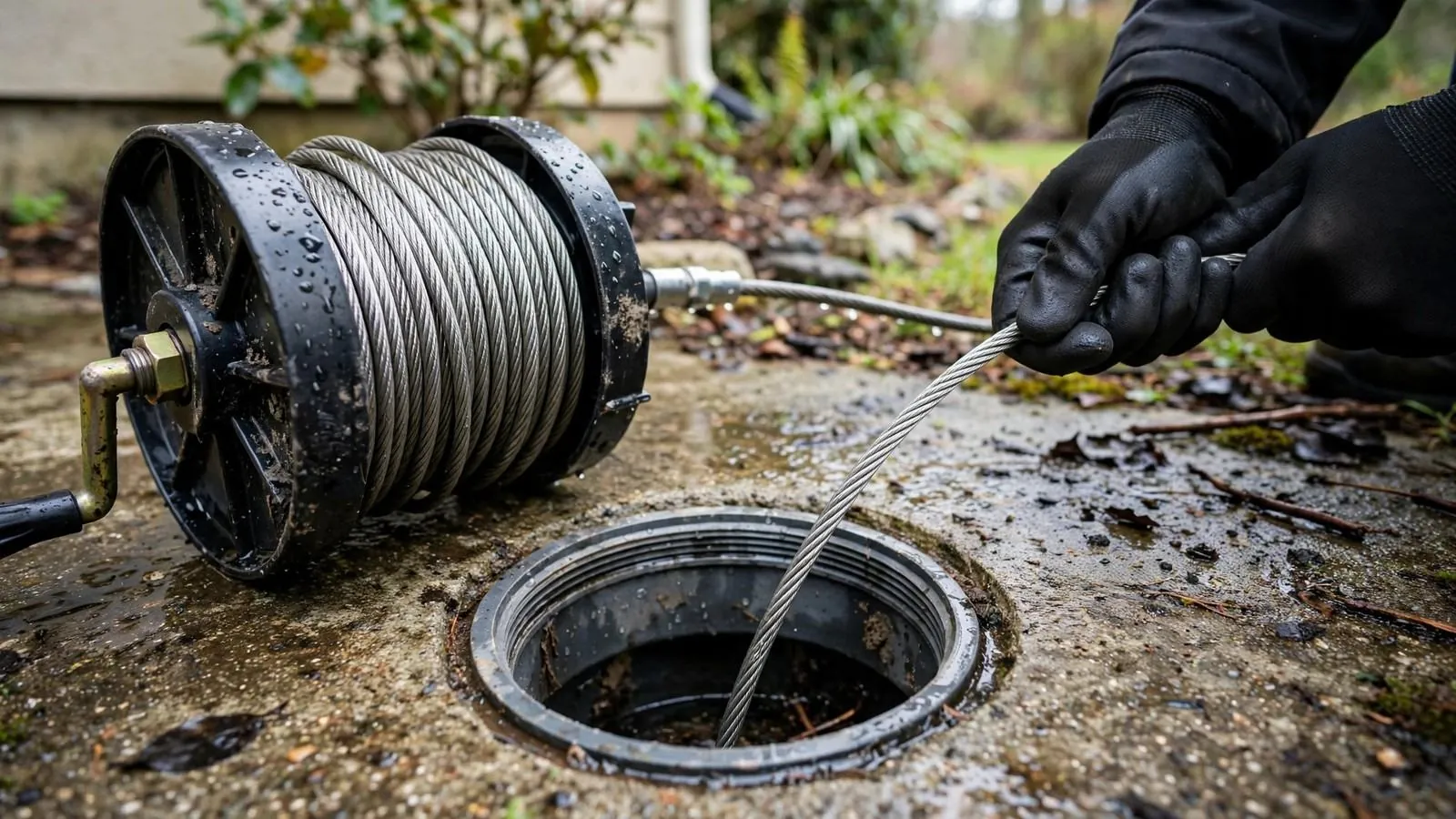
- Clear the stoppageA rotating cable cuts through paper and roots, while a jetting hose uses high-pressure water to scour the pipe wall. The plumber picks one based on what hits the end of the tool.
- Run a camera through the lineA camera shows the pipe wall, root intrusion, offset joints and any belly, and it records where on the line each one sits.
- Test the flowWater is run through the system to confirm it drains freely before anyone calls it done.
- Plan against a repeatA line with roots tends to clog again, so the options are scheduled cleaning, jetting, or a repair at the root entry point.
Cable, jet, or camera first
A cable is the common first tool for an active stoppage because it cuts through quickly. It leaves the pipe wall coated, so debris can catch again within weeks if grease or scale remains. That is the case for sewer line cleaning by cable alone when the line is otherwise sound.
Hydro jetting uses water at high pressure to scrub the interior, which is the better pick for grease, scale and root hairs. Jetting for lines that keep clogging costs more time on site but often resets the pipe for longer. It is not right for a cracked or collapsed pipe, where the pressure can make a bad section worse, and that is another reason to look first.
A camera is the answer to what the pipe looks like. A sewer camera inspection before or after cleaning separates a pipe that needs cleaning from one that needs repair.
What to do while you wait for a plumber
A backing-up main line sends wastewater to the lowest fixture, so protect the house first.
- Stop running water: no laundry, dishwasher, showers or flushing.
- Keep children and pets away from standing wastewater, and wear gloves if you must touch it.
- Move rugs and stored items off wet floors and keep electrical cords out of the water.
- Take photos of the affected area and the water level for an insurance or landlord record.
- Do not pour chemicals into the drain, since the plumber will have to work around them.
Middletown, DE: 811 before any digging, and the town's sewer collection system
If a main line clog leads to a repair that needs excavation, call 811 (Miss Utility) at least 48 hours before anyone digs. Mark the date, because a repair that waits on locating is a repair that waits. If the line is full right now, cleaning through a cleanout does not need a trench, so the 811 call applies to the repair stage and not the clearing.
The Middletown Water Department, at 431 Haveg Road, runs the town's sewer collection system as well as water distribution and hydrants. If your neighbors on the same street report backups, call 302-378-2211 and ask whether the town main is involved. If the problem is only in your house, the plumber will find that out with the camera, and you will not spend a clearing visit on a pipe the town owns.
Source type: Townsend resident information page (811), town Water-Wastewater department page.
Questions Middletown homeowners ask
Can a store-bought main sewer line clog cleaner fix a backed-up line?
Rarely. Liquid products are diluted in a large pipe and slide under roots and paper wads instead of dissolving them.
Maintenance enzymes may help a pipe that is flowing but slowing. A line that is stopped needs a cable or a jetting hose.
How do I know whether I have a main line clog or a branch clog?
Count the affected fixtures. One slow drain is a branch problem, and several at once, especially on the lowest floor, point to the main line.
Water backing up in a tub when the washer drains is a classic main line sign.
Is it safe to use the bathroom if the main line is slow?
Limit it. Every flush and every gallon sent down the line risks pushing wastewater up the lowest drain.
Hold off on laundry and the dishwasher until the line is cleared.
Why does the main line keep clogging after cleaning?
Roots, a low spot, or grease on the pipe wall are the common reasons. A cable opens a channel but leaves the wall coated, so jetting or a repair may be the real fix.
A camera inspection tells you which.
Do I need a camera inspection every time?
No, but it is worth one after a repeat clog or before buying a house. The camera shows damage that cleaning alone will never fix.
What should I do in Middletown if sewage is coming up in my house?
Stop all water use, keep people away from the wastewater, and call a plumber. If neighbors have the same problem, call the Middletown Water Department at 302-378-2211 because the town runs the sewer collection system.
For any immediate danger, dial 911.
The short version
A main line clog is a mechanical problem, so the cleaner that works is a cable, a jet, or both, guided by a camera. Skip the bottle, stop the water, and protect the lowest floor while you arrange the work.
To book a licensed plumber, call (410) 378-7601. The emergency line is open 24/7. We also send plumbers to Townsend and the rest of the service area.
Standards and sources
Repairs to a main line follow 16 Del. Admin. Code 4455, the Delaware regulation based on the 2021 IPC.