
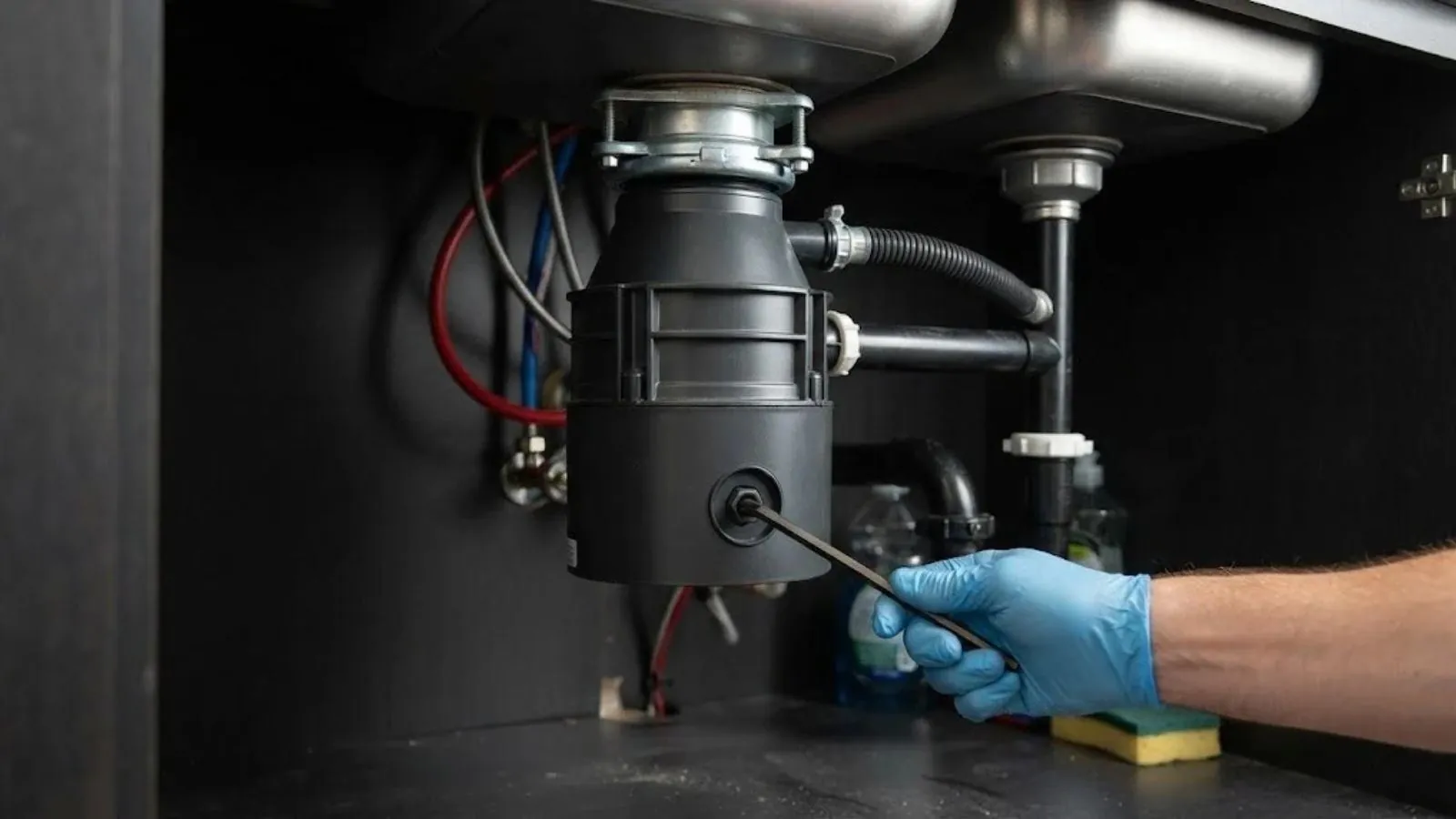
Smoke, sparks or water running under a disposal
A disposal that smells of burning, trips a breaker, or leaks water onto the cabinet floor needs attention tonight. The 24/7 emergency line is open overnight and on weekends, since a unit wired to the house current and sitting in water is more than a plumbing problem.
A hum, a jam or a slow drain can be handled by a same-day appointment when available. If you see smoke or flames, leave the house and dial 911 first.
What to do while you wait
- Switch the disposal off at the wall switch, then turn off its breaker at the panel.
- Do not touch the unit or any wiring if there is standing water or the panel is wet.
- Close the shutoffs under the sink if water is spraying from a hose or the faucet line.
- Empty the cabinet and set a bucket under the leak.
- Photograph the unit, the label on its side and the leak for an insurer or landlord.
What should never go down a disposal
The list is short, and nearly every disposal call starts with one of these.
- Grease, oil and fat, which cool and coat the drain walls past the unit.
- Fibrous scraps such as celery, corn husks, artichoke leaves and onion skins, which wrap the impellers.
- Rice, pasta and oatmeal, which swell and turn to paste in the trap.
- Bones, fruit pits and shells, which can jam the plate and dull the blades.
- Coffee grounds in quantity, which pack into a dense sludge.
- Chemical drain cleaners, which can damage seals and splash back on anyone near the sink.
Hum, silence or leak: what each sign points to
The sound the unit makes narrows the cause before anyone opens the cabinet.
| What you notice | Likely cause | What happens next |
|---|---|---|
| Humming with no grinding. | A jam holding the plate still. | Power off, free the plate with a hex key, press reset. |
| No sound and no hum. | A tripped reset or breaker, or a dead motor. | Check reset and breaker, then test the switch and cord. |
| Water at the top rim. | A failed flange seal or putty line. | Reseat the flange with fresh sealant. |
| Drip at the side hose. | A loose or cracked dishwasher inlet. | Tighten the clamp or replace the hose. |
| Water from the housing or bottom. | A cracked housing or worn internal seal. | Replace the unit. |
| Sink slow to drain with the unit on. | A clog in the trap or branch beyond it. | Clear the line past the disposal. |
Leaks from the housing rarely repair well, since the seal and bearing are part of the sealed case.
Freeing a jammed unit without reaching inside
A jam is the most common fault, and the cure rarely needs a tool beyond a hex key. Start by cutting power at the switch and the breaker.
- Cut powerTurn off the wall switch and the breaker. If the unit is plugged in under the sink, unplug it as well.
- Find the socketLook under the unit for a hex socket in the center of the bottom plate. Most use a 1/4 inch hex key.
- Work the plateTurn the key back and forth until the plate rotates freely. This breaks the jam without a hand in the unit.
- Clear the debrisShine a flashlight in the opening and use tongs or pliers, never fingers, to pull out what stalled it.
- Press resetPress the red reset button on the bottom, restore power and run cold water while you test it.
Leaks at the flange, the dishwasher inlet or the housing
Where the water appears tells you the cause. Water at the top of the unit, around the sink flange, means the seal between the sink and the mounting ring has failed. The repair is to release the mount, clean the old sealant and reseat the flange. A dry rag held against each joint while the water runs shows the real source.
A drip at the small side hose is the dishwasher inlet. The clamp may be loose, or the rubber has hardened and cracked, and replacing the hose is straightforward. Water coming from the bottom or the body of the housing is the one to worry about, because a cracked housing or a worn lower seal cannot be sealed from outside.
A leak that looks like the disposal can also come from the faucet above it, as covered in faucet repair, so the plumber dries and tests each joint before replacing a good unit.
When the clog sits beyond the disposal
If water backs up into the second sink bowl or the dishwasher drain, the disposal may be working fine. The trap, the branch line or the kitchen's connection to the main stack can be packed with grease and food solids. Running the unit longer does not clear it, and a plunger can push the blockage further along.
A kitchen line that clogs again within weeks needs a cable or jet and often a camera look, which is described under drain cleaning for kitchen lines. Run the unit with cold water during use, since warm water melts grease that later hardens farther down.
Repair or replace, horsepower and mounting
Repair is reasonable when the problem is a jam, a loose hose or a flange seal. Replacement is the better call when the housing leaks, the motor stays silent after a reset, the unit rusts through, or it is old enough that parts and labor outrun the value. Disposals commonly last somewhere around 8 to 15 years.
Horsepower sets how well it handles scraps. A 1/3 horsepower unit suits light use, 1/2 horsepower covers an average household, and 3/4 or 1 horsepower is for heavy use or fibrous food. A bigger motor needs a sturdy mount and a matching drain size.
Mounting follows the sink. Many units use a quick-lock ring that twists on, others a three-bolt ring that needs a fixed sink flange. A plumber also removes the dishwasher knockout plug in the new unit, since leaving it in blocks the dishwasher drain and sends water back onto the dishes. Larger installations may involve a full plumbing installation visit.
The dishwasher air gap and drain connection
The dishwasher drains through the disposal or into the sink trap. The goal is to keep dirty water from flowing back into the dishwasher. An air gap, a small cylinder on the sink deck, does this with a break in the line, while some installations use a looped hose raised high under the counter instead. Ask the plumber which connection suits your setup.
Electrical safety around the unit
Power off at the wall switch and at the breaker before you free a jam, and never reach into the grinding chamber even with the power off. A hex key from below and tongs from above are the tools. A unit with a damaged cord, a wet connection box or a tripping breaker should be left alone until it is inspected.
Why grease and fiber matter in Middletown
The Middletown Water Department runs the town's sewer collection system, so what goes down your sink travels through town pipes. Grease hardens and fibrous scraps tangle, and both build up in lines. For an emergency, dial 911, and for a town sewer question call 302-378-2211. A backup in your own kitchen line is a call to the plumber.
What changes the price of garbage disposal repair
Freeing a jam and replacing a unit are very different jobs, so the cost follows what is found.
Repair or replacement
A jam or hose swap is a short call, while a new unit involves the unit, mounting and wiring.
Horsepower and brand
Heavier-duty units cost more and need a matching mount.
Existing mounting
A compatible mount saves work, while a different style of ring means adapting the sink.
Drain and electrical condition
A cracked trap, a corroded fitting or a damaged cord adds repairs.
After-hours call
A midnight leak is scheduled differently from a same-day appointment when available.
Sudden leak damage from a failed unit may be covered while wear on the unit itself usually is not. Read your policy or ask the insurer, and keep photos of the label and the leak.
You will hear a clear price before work starts, so call (410) 378-7601 and describe what the disposal is doing.
Garbage Disposal Repair: Common Questions
Do you handle garbage disposal repair emergencies at night or on weekends in Middletown?
Yes. The 24/7 emergency line takes calls about leaking disposals, tripped breakers and burning smells at night and on weekends.
Switch off the unit at the wall and the breaker, close the sink shutoffs if water is flowing, and call. Hums and jams can be booked as a same-day appointment when available.
Why is my disposal humming but not spinning?
A jam is holding the grinding plate still.
Turn off the switch and the breaker, turn the plate with a hex key from below, clear what stalled it, then press the red reset button.
Where is the reset button and what does it do?
The reset button is a small red button on the bottom of the unit.
It trips when the motor overheats or jams and restores power once pressed. If it trips again right away, the motor or a clog downstream is the cause.
How long does a garbage disposal last?
Many last roughly 8 to 15 years, though use and what goes down it change that.
A unit that leaks from the housing, rusts through or will not turn after a reset is usually at the end of its life.
Can a leaking disposal be repaired?
Sometimes, depending on where it leaks.
A loose flange or hose can be fixed, but a cracked housing or worn lower seal is a reason to replace the unit.
What does a dishwasher air gap do?
An air gap keeps dirty sink water from running back into the dishwasher.
It is a small cylinder on the sink deck, and some homes use a high loop in the hose instead.
Do you service disposals in Townsend?
Yes, the same dispatch line covers Townsend, about 7 miles south on DE-71.
See the Townsend plumber page for the local details.
If your disposal is leaking or smells hot, call (410) 378-7601 and tell us what you see.
Standards and sources
Drain connections for disposals and dishwashers sit under Delaware's plumbing regulation (16 Del. Admin. Code 4455, based on the 2021 IPC). Delaware requires a Delaware license for plumbing work, and delpros.delaware.gov lets you verify one.