
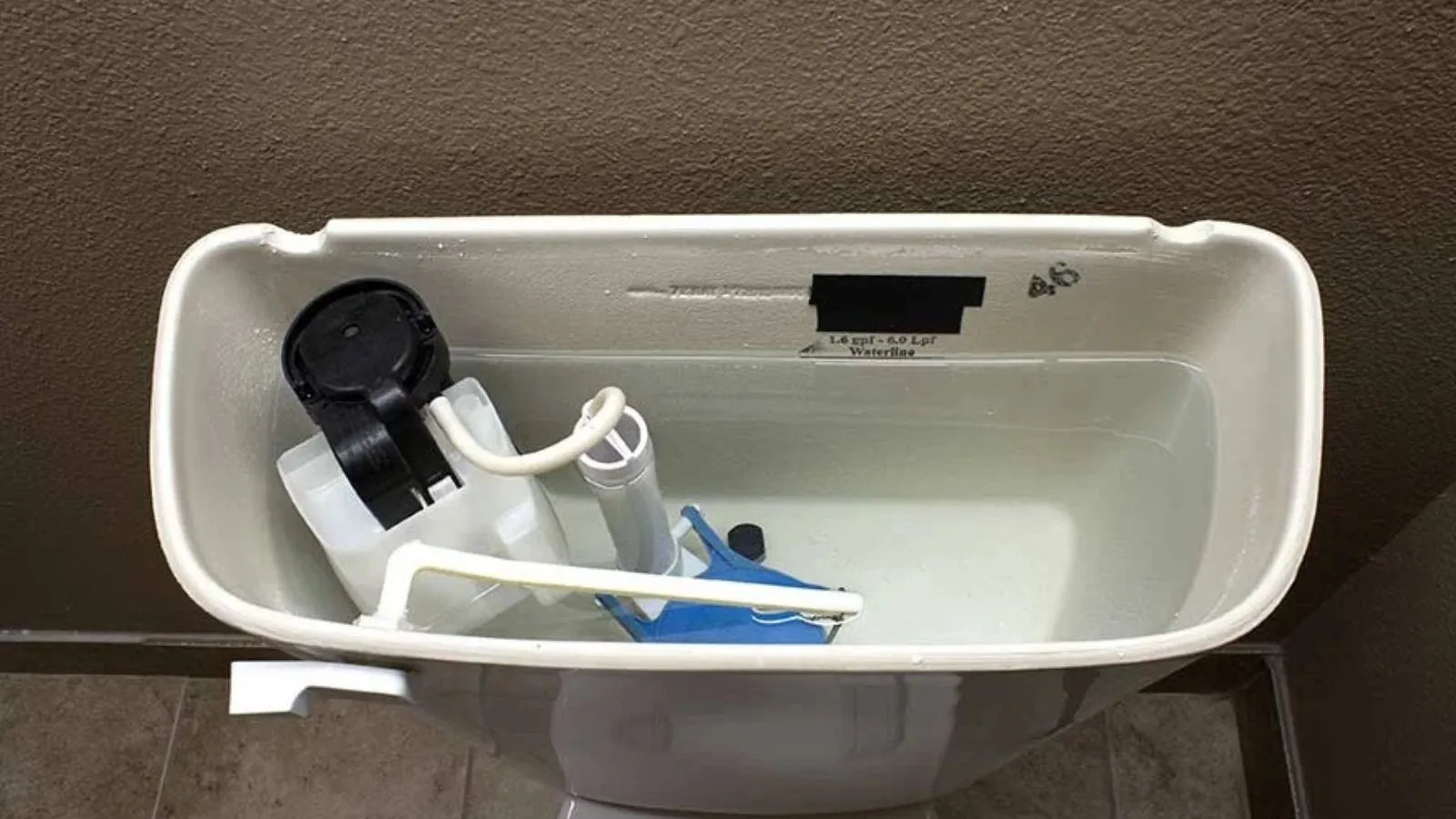
A toilet that is overflowing or leaking onto the floor
Water spilling over the rim or pooling around the base can reach a ceiling below or a wall behind the bowl in minutes. The 24/7 emergency line is open overnight and on weekends for exactly this. A toilet that merely runs or rocks can wait for a same-day appointment when available.
Stop the flow first, then call. Clean water from the tank is a different problem from a bowl full of sewage, and the second one means the drain is blocked below the toilet.
What to do while you wait
- Close the oval valve on the wall or floor behind the toilet by turning it clockwise until it stops.
- If the bowl is still rising, lift the tank lid and push the rubber flapper down, or close the main water shutoff.
- Do not flush again, and keep people and pets out of the wet area.
- Turn off power to any outlet or light the water is reaching.
- Mop up and photograph the damage for an insurer or landlord.
Match the symptom to the likely part
The same few parts cause most toilet calls, and the symptom usually points at one of them.
| What you notice | Likely cause | What the plumber does |
|---|---|---|
| Water trickles into the bowl or the tank refills on its own. | A flapper that no longer seals. | Replaces the flapper or cleans the seat and checks the chain length. |
| Hissing or constant refilling after a flush. | A worn fill valve. | Swaps the fill valve and sets the water level. |
| Weak or partial flush. | Mineral-clogged rim jets or a low tank level. | Clears the jets, raises the water level, checks the flush handle linkage. |
| Toilet rocks or shifts. | Loose closet bolts or a failed seal. | Resets the bowl on a new wax ring and shims it level. |
| Wet floor at the base. | A failed wax ring or cracked bowl. | Pulls the toilet, replaces the seal, inspects the flange. |
| Slow flush with gurgling in other drains. | A partial blockage in the branch drain. | Clears the line beyond the toilet. |
Part names matter because the wrong replacement, such as a flapper that does not fit the valve seat, can leave the toilet running.
A toilet that runs, and the water bill
A running toilet is the quietest water waster in the house. A flapper that has hardened or warped lets water creep from the tank into the bowl, and the fill valve opens to refill it over and over. Rubber parts like these often wear out after several years, and fill valves and flappers in homes from the 2000s growth wave are likely at replacement age.
Whether a running toilet shows on the bill depends on how long it runs and how the town reads your meter. Ask the Middletown Water Department at 302-378-2211 how usage appears on a bill, then compare the last two bills with the date the running started.
Look inside the tank for a fill valve that keeps hissing, a chain that is too short or too long, and water that sits above the top of the overflow tube. Each one is a quick check you can make with the lid off.
The dye test for a silent leak
Some toilets leak with no sound and no puddle. This test shows whether the flapper is sealing, and a meter that moves with the house idle should be followed by leak detection if the toilet passes.
- Prepare the tankTake off the lid, and do not flush during the test. Check that nobody else runs water.
- Add dyeDrop in a dye tablet or about ten drops of food coloring and leave it alone for 10 to 15 minutes.
- Look in the bowlColor in the bowl without a flush means the flapper is leaking. Clear water means the flapper is holding.
- Flush and clean upFlush to clear the dye so it does not stain the bowl, and note the result for your plumber.
A weak flush and a rocking bowl
Most toilets made since the mid-1990s are rated at 1.6 gallons per flush or less, so they depend on clean rim jets and the right tank level. White scale in the small holes under the rim weakens the swirl, and a vinegar soak sometimes clears light buildup. A flush handle with slack in its chain also cuts the flush short.
A toilet that rocks has lost its firm seat on the floor. Loose closet bolts are the simple cause, but a rocking bowl also breaks the wax seal, which lets sewer gas and water escape. A plumber resets the toilet on a new seal rather than just tightening the bolts, and shims the base when the floor is uneven.
A leak at the base and the wax ring
Water at the base of the toilet can come from the wax ring, a loose tank bolt or the supply connection, so the first job is finding out which. Dry the floor, wrap tissue around the supply line, and flush once to see where the tissue darkens. A ring that fails leaves a wet circle at the bowl's foot, often with a sewer smell.
The fix is to shut the water, drain the tank and bowl, lift the toilet, and inspect the flange before setting a new wax or wax-free seal. A soft subfloor under the toilet is a bigger sign. Damp, spongy wood means the leak has run for some time, and the plumber will tell you before repairs go further.
Installing a new toilet
Replacing a toilet is more than swapping a bowl. The first question is the rough-in, the distance from the finished wall to the center of the floor drain flange. A 12-inch rough-in is the most common, but 10 and 14 inch layouts exist, and a toilet built for the wrong one will not sit square to the wall.
The flange is the ring that anchors the toilet to the drain, which is often a 4-inch pipe. It should sit level with or slightly above the finished floor. If the flange is cracked, rusted or set below the floor, the plumber repairs it first, because a new bowl on a bad flange will rock and leak again.
A toilet bowl is heavy, often 60 pounds or more, so setting one is a two-person lift. The plumber also checks the supply valve and line, the closet bolts, and whether the new tank fits the space behind it.
What a plumber checks before setting a new toilet
- The rough-in distance, measured from the finished wall to the center of the flange.
- The flange height, condition and whether it is bolted securely to the floor.
- The floor for softness, staining or rot around the old base.
- The supply valve and line, replacing stiff or crusted ones.
- Clearance to the sink, tub and wall for the new bowl and seat.
- Whether the drain flows freely before the seal goes in.
Supply line and shutoff valve
The braided line from the wall to the tank is a common failure point once it gets stiff or the fittings corrode. A line that weeps at the nut, or a shutoff valve that drips at the stem, should be replaced before it fails fully. A shutoff that will not close at all is the same problem described under faucet and valve repair.
A clog or a deeper drain problem
A single clogged toilet usually clears with a flange plunger or a closet auger, a coiled hand tool that reaches a few feet past the bowl. Plunge with a firm seal and steady strokes. If the water drains and the clog returns within days, something is catching further down.
Gurgling in a tub, a shower that backs up when the toilet flushes, or two fixtures clogging at once all point to the shared drain and not the bowl. That is a job for drain cleaning on the main line, not another round with the plunger. If sewage rises in the lowest drain of the house, stop using water.
Who to call when sewage backs up
The Middletown Water Department runs the town's sewer collection system, and its number is 302-378-2211. If neighbors have the same backup, a town main may be the cause. For an emergency involving a safety hazard, dial 911, and for a plumbing problem inside your own walls, use the 24/7 line.
What changes the price of toilet repair
A flapper swap and a full reinstall are very different jobs, so the cost depends on what is found.
Part involved
A flapper or fill valve is a short job, while a failed flange or soft floor adds repair work.
Repair or new toilet
Old, cracked or poorly flushing bowls may be better replaced than repaired.
Toilet model
A standard two-piece bowl is simpler to set than a wall-hung unit or a comfort-height one-piece model.
Floor and flange condition
Rot, rust or a low flange adds carpentry and plumbing work.
Time of the call
A midnight overflow is scheduled differently from a same-day appointment when available.
Sudden overflow damage is often treated differently by insurers than a slow leak at the base that went unnoticed. Read the policy or ask your insurer, and keep photos of the floor and the failed part.
Call (410) 378-7601 for a clear price before work starts, and describe what the toilet is doing.
Toilet Repair: Common Questions
Do you handle toilet repair emergencies at night or on weekends in Middletown?
Yes. The 24/7 emergency line takes calls about overflowing toilets and leaks at the base at night and on weekends.
Close the valve behind the toilet, do not flush, and call. A running or rocking toilet can be booked as a same-day appointment when available.
Why does my toilet run on its own?
A worn flapper or fill valve is the usual reason.
Water leaks from the tank into the bowl, the tank drops, and the valve opens to refill it. A dye test shows which side is leaking.
Do I need a new wax ring when I reset a toilet?
Yes, a toilet that has been lifted should go back on a new seal.
An old wax ring flattens and sets to the shape of the first installation, and reusing it invites a leak at the base.
What does the supply valve do and when does it need replacing?
The supply valve behind the toilet shuts water to the tank so you can repair or replace parts.
Replace it if it drips at the stem, will not close fully, or has not been turned in years and feels seized.
What rough-in size do I need?
Measure from the finished wall to the center of the drain flange, because that number decides which toilet fits.
A 12-inch measurement is the most common, with 10 and 14 inch layouts less so. Measuring from a baseboard gives the wrong answer.
When should I stop plunging?
Stop when water has not moved after several firm tries or when other drains gurgle.
A clog that returns, or one that shows in the tub or sink too, is in the drain beyond the toilet.
Do you handle toilet repair in Townsend?
Yes, the same dispatch line covers Townsend, about 7 miles south on DE-71.
See the Townsend plumber page for the local details.
If your toilet is overflowing or leaking, call (410) 378-7601 now and tell us what you see.
Standards and sources
Toilet replacement and drain work fall under Delaware's plumbing regulation (16 Del. Admin. Code 4455, based on the 2021 IPC), and the plumber doing it must hold a Delaware license that you can check at delpros.delaware.gov.