
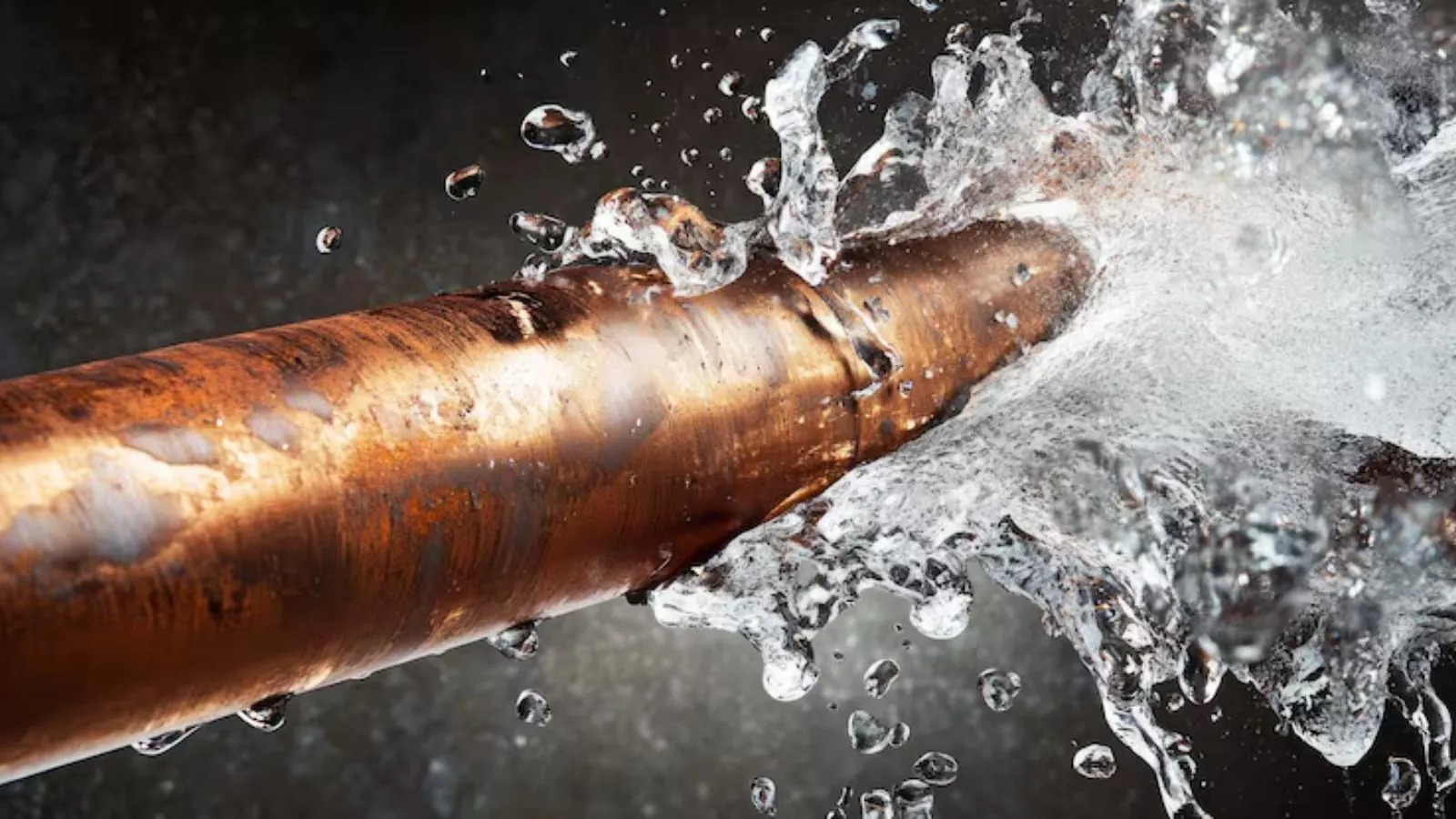
The first minutes: shut off, drain, protect, document
The order below limits damage while you wait. Move fast but do not take risks with electricity or deep water.
- Close the main water valveTurn it clockwise where the line enters the house. If it will not move, do not force it with a wrench, and tell the dispatcher.
- Drain the linesOpen the lowest faucet, then an upstairs one, to empty the pipes so less water reaches the break.
- Cut power where water is fallingSwitch off the breaker for a wet room only if the panel is dry and you can reach it standing on dry floor. Otherwise stay out and call 911 if you see sparks.
- Move belongings and photographLift rugs and electronics off the floor, then photograph the damage, the pipe and your meter for the insurer.
- Call the 24/7 lineDescribe where the water is coming from and whether it has stopped. A clear picture helps the plumber arrive with the right parts.
When a pipe break cannot wait until morning
Water pouring from a ceiling, a pipe that has split and will not stop after the main is closed, or water near the electrical panel is a night-and-weekend problem. Burst pipe calls are answered 24/7, and the plumber who comes decides on site whether a temporary patch holds until daylight or the pipe needs replacing now.
Keep your own safety first while you wait.
What to do while you wait
- Do not step into standing water if any outlet, appliance or cord is submerged, and call 911 if you suspect live electricity.
- Keep everyone out of rooms under a sagging, bulging or dripping ceiling, since wet drywall can drop without warning.
- Put buckets or towels under active drips and open a window if you smell mold or damp insulation.
- If the smell is gas rather than damp, leave the building, call 911, then call the gas utility.
- Leave the water heater alone until the plumber has looked, because a drained line can leave it heating an empty tank.
Is it a supply pipe or a drain pipe that failed?
The two behave differently and get fixed differently, so working out which one has failed saves time on the phone.
| Clue | Supply pipe (pressurized) | Drain pipe (gravity) |
|---|---|---|
| When water appears. | Constantly, even when nothing is running. | Mostly when a fixture drains, a tub empties or the washer discharges. |
| Effect of closing the main. | Leak stops or slows sharply. | Leak keeps coming, because the water is wastewater already in the system. |
| Water type. | Clean, often with strong spray or hiss. | Gray or dirty, sometimes with a sewer smell. |
| Meter test. | Meter keeps turning with every tap off. | Meter stays still when no one uses water. |
| Common cause. | Frozen split, failed joint or corroded section. | Cracked fitting, loose coupling or a pipe that has settled. |
A drain that leaks inside a wall is a different repair from one buried in the yard, which is where sewer line repair comes in.
Cracked and broken pipe repair behind walls and floors
A cracked pipe is more than a bad leak. It usually means the metal or plastic has fatigued, been struck, or been stressed by pressure swings, and it can mean neighboring pipe is in the same shape. The plumber traces the water to its source, which is often several feet from the stain, since water runs along studs and pipes before it drips.
Locating without demolition comes first when possible. Moisture meters, thermal cameras and pressure tests narrow the target so the opening in the wall or ceiling stays small. For stubborn cases, a leak detection visit with acoustic gear can pin the break down before anyone cuts drywall.
Repair means cutting out the damaged length and soldering, crimping or gluing in new pipe, depending on the material. Then the line is pressurized and watched. Ask whether neighboring joints also look weak. A single repair in a tired run may only buy you months, and the plumber can tell you when a longer replacement is the better use of the opened wall.
Frozen pipes: why they split and how to thaw them
Water expands about 9 percent when it freezes. A pipe full of ice is not what bursts, though. The ice plug grows, traps water between itself and the closed faucet, and pressure there climbs until the pipe wall splits, usually along its length. The split often sits well away from the ice.
Pipes in exterior walls, attics, crawlspaces, garages and unheated basements freeze first. If a faucet that ran yesterday gives only a trickle on a cold morning, suspect ice. Shut off the main, open the faucet so melting water has somewhere to go, and warm the area gently with a hair dryer or a space heater set well away from anything that burns, working from the faucet toward the frozen section.
If you find a split, leave the main off. Pipes that thaw often start leaking the moment ice melts, so the plumber should look before water comes back on.
What not to do with a frozen or burst pipe
A few well-meant moves make things worse.
- Never use an open flame, torch or heat gun on a pipe. Paint, insulation and framing nearby can ignite.
- Do not turn the water back on to test a pipe that has frozen and thawed. A hidden split will flood the wall.
- Do not pour boiling water over a pipe, since a sudden temperature change can crack the pipe or fitting.
- Do not leave a thawed pipe unchecked, because the break may only leak under pressure.
- Do not cut into drywall near wiring or a ceiling light fixture until the power is off.
- Do not assume the wet area is the break. Water often travels along framing before it shows.
Repair choices by pipe material
Each material has its own repair method and weak points. The plumber identifies yours on site, so this table only shows what to expect.
| Pipe material | Typical repair | Things to know |
|---|---|---|
| Copper. | Cut out the damaged length and solder in new copper or fit a push-to-connect coupling. | Pinholes from corrosion often mean other spots are thinning, so ask the plumber to check nearby sections. |
| PEX. | Cut and join with crimp or expansion fittings. | Flexible tubing tolerates some freezing, but fittings and kinked bends remain weak points, and it cannot sit in sunlight. |
| CPVC. | Replace the section with solvent-welded fittings. | It turns brittle with age and heat, so one crack may be a sign other sections are close behind. |
| Galvanized steel. | Replace with new pipe, often by transitioning to another material. | Rust narrows the bore from inside, and threaded joints are hard to unwind, so repairs can expand. |
A repair that exposes several tired sections can be a signal to ask about repiping part of the house while walls are open.
Pinhole leaks, copper joints and cracked drain pipes
Pipe leak repair covers the small, steady failures that never flood a room: a pinhole in a copper line, a weeping union at the water heater, a sweating fitting. They can stain a ceiling over months, so a dry-looking joint with green crust or a white mineral ring deserves attention. Copper pipe repair is usually a cut-and-solder or a push-fit coupling, and burst pipe repair is the same job at a higher flow.
Drain pipe repair is its own category. A slip nut that has loosened under a sink, or a cracked trap or branch in a wall, leaks only when water flows through it.
Failures at the water heater connections are worth a separate look. A leaking tank is a water heater repair question, and a leaking connector is only a pipe repair.
Emergency numbers and who owns which pipe
Dial 911 for any emergency involving electricity, gas or injury. The Middletown Water Department, at 302-378-2211, handles questions about the water system and the main in the street, and the town office is 302-378-2711. If water is coming out of the street, the curb or the meter box rather than your house, that is the Water Department's business, not a pipe you repair.
Many homes around Middletown went up during the 2000s growth wave, so original shutoff valves and supply lines are now reaching an age where they may stick or fail. Find your main valve now, turn it closed and open once, and know where your meter is. Townsend homes get water from a different supplier than the town, and the Townsend plumbing page explains how we cover that side of DE-71.
What changes the price of burst pipe repair
A pinhole in an exposed copper line and a split behind a finished ceiling are very different jobs. These factors explain the spread.
Pipe location and access
Exposed basement pipe is quick to reach, while a pipe inside a finished wall or ceiling adds opening and patching work.
Pipe material
Copper, PEX, CPVC and galvanized each need different fittings, tools and techniques.
Extent of the damage
One failed section costs less than a run that has thinned or cracked in several places.
Water cleanup
Drying, removing wet drywall and insulation are separate from the pipe repair itself.
Timing and urgency
An active leak at night involves different logistics than a repair scheduled for a normal day.
Homeowner and renter policies often cover sudden and accidental water damage, such as a pipe that bursts, while gradual leaks and wear are commonly excluded. Photograph everything, keep the damaged pipe section if the plumber offers it, and call your insurer or landlord early.
Call (410) 378-7601 for a clear price before work starts, once the plumber has found where your pipe actually failed.
Burst Pipe Repair: Common Questions
Do you handle burst pipe emergencies at night or on weekends in Middletown?
Yes. Burst and frozen pipe calls are taken 24/7, including nights, weekends and holidays, and same-day appointments are available when schedules allow.
Close your main valve first, since that does the most to limit damage while you wait.
What should I do first when a pipe bursts?
Close the main water valve, usually where the line enters the house, and open a low faucet to drain the lines.
Then keep away from electrical areas that are wet, photograph the damage, and call the plumber.
Will my pipe burst if it freezes?
Not always. A frozen pipe can hold ice for days without splitting, but the risk climbs as the ice plug traps pressure.
If a frozen pipe is found, open the nearest faucet and shut off the main until a plumber has checked for splits.
How can I tell where a hidden leak is coming from?
Look for the highest wet spot, since water travels down along framing. A stain on a ceiling often sits below, not at, the break.
A moisture meter, thermal camera or pressure test is the more reliable way to find the source.
Is a copper pipe repair permanent?
Yes, when the surrounding pipe is sound. A properly soldered or push-fit coupling can last as long as the pipe it joins.
If the pipe around it is thin or pitted, new leaks may appear nearby, so ask the plumber to check the run.
Does my homeowners insurance pay for burst pipe damage?
Many policies cover sudden and accidental water damage but not gradual leaks or wear. Policy wording varies.
Read your policy or ask the insurer, and document the break with photographs and dates before cleanup.
Can a plumber fix a leaking drain pipe without opening the wall?
Sometimes. If the leak is at an accessible joint, trap or under-sink connection, the repair is simple.
A crack inside a wall or ceiling usually requires an opening, and the plumber will locate the damage first to keep it small.
If water is escaping and you cannot stop it, call (410) 378-7601 and tell us where you see it.
Standards and sources
Permanent repairs to a failed pipe fall under Delaware's plumbing regulation (16 Del. Admin. Code 4455, based on the 2021 IPC). For an emergency involving safety, the town directs callers to dial 911, and water system questions go to 302-378-2211.