
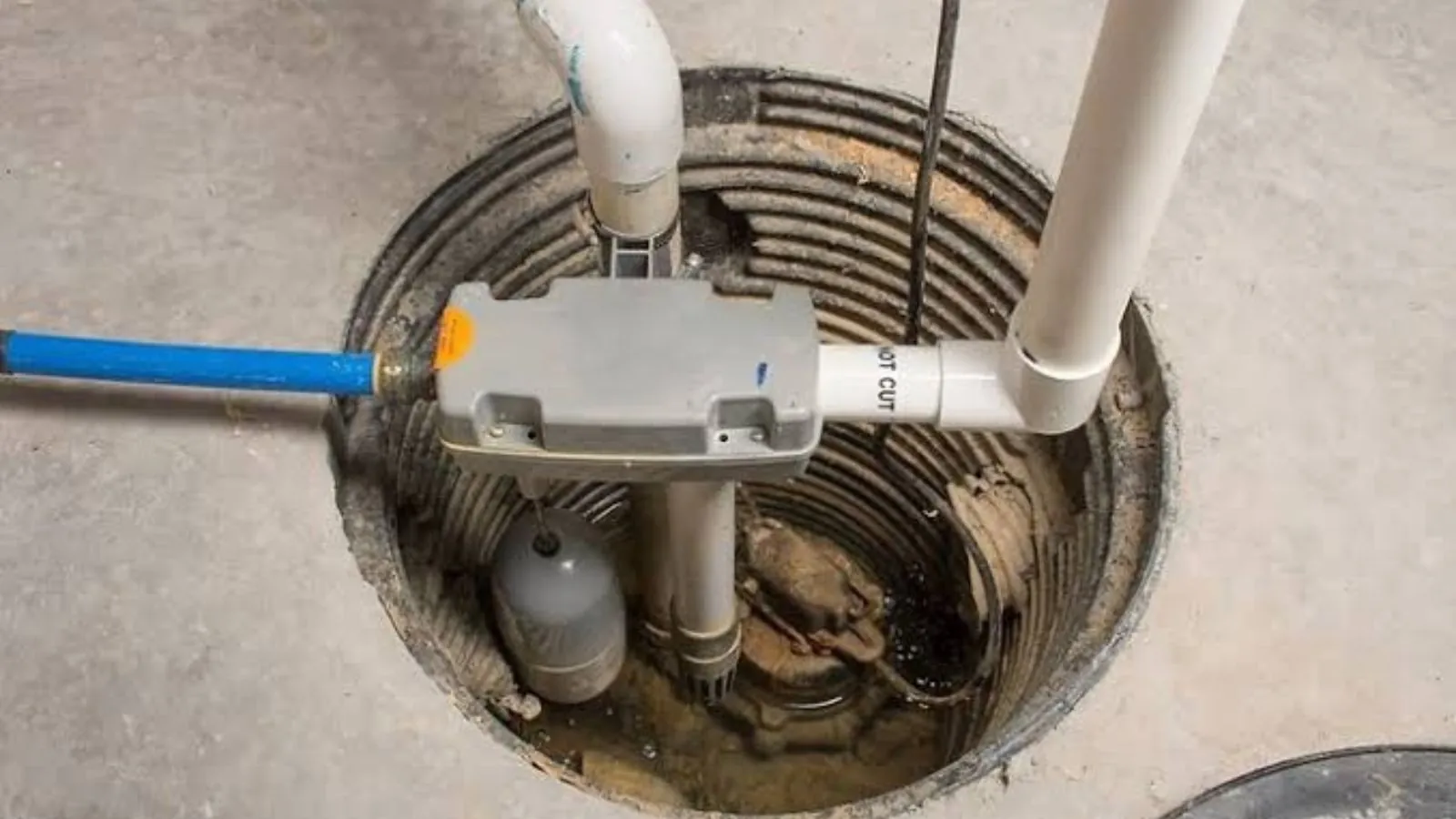
Symptom, likely cause and what gets checked
Pump trouble falls into a few repeating patterns. This table pairs each one with what a plumber looks at first.
| What you notice | Likely cause | First check |
|---|---|---|
| Pump will not start, pit is filling. | No power, tripped breaker or outlet, failed switch or burned-out motor. | Plug, outlet, breaker, then lift the float by hand. |
| Motor hums but no water moves. | Jammed impeller or a stuck check valve. | Unplug, then look for gravel or debris at the intake. |
| Pump runs constantly. | Float stuck high, failed check valve, or very high groundwater. | Float position, valve flapper, water level in the pit. |
| Pump turns on and off every few seconds. | Check valve missing or failed, letting water drain back into the pit. | Valve condition and the length of the discharge pipe. |
| Loud rattling, grinding or banging. | Debris on the impeller, worn bearings or valve slam. | Listen with the pump running, then inspect. |
| Water in the pit but not discharging outside. | Frozen or kinked discharge line, or a blockage. | Follow the pipe to where it exits. |
These patterns do not replace a hands-on look, but they help you describe the problem on the phone.
When the pit is rising and the pump is not keeping up
A pit filling toward the floor edge during a storm is an emergency, because a few inches of groundwater on a finished basement floor ruins carpet, drywall and stored belongings. Sump pump calls are answered around the clock, and a rainy night is exactly when pumps are most likely to quit.
While you wait, buy time safely.
What to do while you wait
- Check that the pump is plugged in and the outlet is live. Do not touch a plug or cord if water has reached it.
- Stay away from the electrical panel if you would stand in water to reach it, and call 911 if you smell burning or see sparks.
- Bail the pit with a bucket or a wet vacuum if you can do it safely, which can slow the rise.
- Move boxes, electronics and furniture off the floor and away from the wall where water is entering.
- Photograph the pit, the floor and any damage for your insurer, and note the time.
A pump that will not start, even though the pit is full
Begin with power. A tripped ground-fault outlet is the most common reason a pump goes quiet after a storm, and it takes ten seconds to check. If the outlet works, lift the float by hand. If the motor starts, the float or switch is the failed part and the pump itself may be fine.
If nothing happens with power confirmed and the float raised, the motor has usually failed. Pumps that sit idle for months can also seize. Many last somewhere around seven to ten years, so an older unit that fails is generally better replaced than rebuilt. Where a new pump needs a new outlet or circuit, plumbing installation work covers the fittings and pipe that go with it.
Running constantly, cycling and making noise
A pump that runs nonstop is either fighting a lot of water or not seeing the water level drop. A float stuck against the wall of a narrow pit never lets the switch turn off. A failed check valve lets water in the pipe fall back down, so the pump must lift the same water again.
Short cycling, where the pump starts and stops every few seconds, usually means the pit is small relative to the pump or the check valve is failing. Rattling can be a stone in the impeller, and a loud clunk when the pump stops is often the valve slamming shut. A plumber can replace the valve or float in a short visit when the pump is otherwise healthy.
Constant running during a dry week is different. That points to a leak in a supply or drain pipe rather than groundwater, and burst pipe repair covers the next step.
Float switch, check valve and discharge line
Three parts account for most repairs. The float switch rises with the water and starts the pump. The check valve sits on the discharge pipe just above the pump, usually with a small hole drilled in it to prevent air lock, and stops pumped water from falling back. The discharge line carries water out of the house and must end somewhere that lets the water drain away from the foundation.
Winter creates its own problem. A discharge pipe that holds water can freeze solid and block the pump, which then overheats. Ask the plumber about pipe slope and an outlet that does not hold water. If you want to change where the pipe drains, or tie into any existing line, ask the town permits office first, since the rules for that are not something to guess.
Ejector pumps for basement bathrooms
A bathroom below the level of the sewer line cannot drain by gravity. An ejector pump sits in a sealed basin, collects wastewater from the toilet, shower and sink, grinds solids, and lifts everything up into the drain. It works the same way as a sump pump, but the contents are sewage, so the lid must stay sealed and vented.
Warning signs include a sewer smell near the basin, a toilet that drains slowly, gurgling after a flush, and an alarm on the control panel if one is fitted. Wipes and feminine products clog these pumps fast. A failed ejector is a sewage problem, and the right first step is to stop flushing and call. If the smell is not coming from the basin, a leak detection check can rule out a cracked drain or vent nearby.
Power outages and battery backup
Storms that fill sump pits often take out the electricity at the same time, which means the pump stops when it is needed most. A battery backup pump sits beside the main pump and runs from a deep-cycle battery for a limited time, often several hours depending on how hard water is coming in, and a 12-volt deep-cycle battery is a common choice. It needs a charged battery, a test now and then, and a battery replacement every few years.
A backup does not make sense for every house. If your pit rarely fills and the main pump is new, a battery system may be more than you need. If your basement is finished, or your pump runs every few minutes in wet weather, it is worth pricing.
Plumber or waterproofing contractor: who fixes what
A plumber handles the pump, the pit liner, the float, the check valve, the discharge pipe, and any supply or drain leaks that mimic groundwater. If the water in your basement comes from a cracked pipe, a failed water heater or a leaking fixture, a plumber is the right call.
A waterproofing contractor handles the building envelope: sealing wall and floor cracks, installing interior drain tile, exterior excavation, regrading and window wells. If your basement takes in water along the wall-and-floor joint, the pump only treats the symptom. Some jobs need both, and an honest plumber will tell you when a leak is outside plumbing scope instead of selling a pump swap.
Groundwater depth is different on every lot
The U.S. Geological Survey published a water-table, surface-drainage and engineering soils map of the Middletown area in 1964 (Hydrologic Atlas 82). The practical lesson is that groundwater depth varies from lot to lot, so your neighbor's dry basement says little about yours. Look at your own pit after a heavy rain and note how fast it fills and how often the pump cycles.
Middletown grew from 6,161 residents in 2000 to 23,192 in the 2020 census, and many homes were built in that growth wave. Pumps installed then are now reaching the age where replacement is on the table. If yours has never been tested, test it this month. The same advice applies to homes on the Townsend side of DE-71, where our Townsend plumbers take the same calls.
Test your sump pump in five minutes
Do this in spring and before the wet season.
- Confirm the pump is plugged into its own working outlet, preferably with ground-fault protection.
- Pour a bucket of water slowly into the pit until the float rises and the pump starts.
- Watch that the pump empties the pit and shuts off cleanly without chattering.
- Listen for a thump from the check valve, which is normal, and for grinding, which is not.
- Walk outside and confirm water leaves the discharge pipe and drains away from the house.
- Clear leaves and debris from the discharge outlet, and check that the line is not kinked or buried.
What changes the price of sump pump repair
A float replacement and a full pump and pit replacement are far apart. These factors set where yours lands.
Repair or replace
A new switch or check valve is a small job, while a new pump involves the unit, fittings and testing.
Pump type and size
Horsepower, submersible or pedestal design, and the volume of water to move all affect the unit.
Pit and discharge condition
A cracked pit, undersized basin or damaged discharge line adds work.
Battery backup
A second pump, battery and charger are separate equipment.
Access and electrical work
A tight basement, a missing outlet or a new circuit changes the labor.
Standard homeowner policies often exclude groundwater seepage and may cover sump pump overflow only with an added endorsement, so check your policy language, and ask your insurer about water backup coverage before the wet season.
Call (410) 378-7601 for a clear price before work starts, after the plumber has tested your pump and looked at the discharge.
Sump Pump Repair: Common Questions
Do you handle sump pump emergencies at night or on weekends in Middletown?
Yes. A failed sump or ejector pump during a storm gets the 24/7 emergency line, and same-day appointments are available when schedules allow.
Check the plug and breaker, move belongings off the floor, and call with what you hear from the pit.
Why is my sump pump running but not pumping water?
The impeller is likely jammed, the check valve is stuck, or the pump has lost its prime. A humming motor with no flow is a sign to unplug it.
A plumber can clear the intake or replace the unit if the motor is worn.
Why does my sump pump turn on and off so often?
Short cycling often means the check valve is failing and water is draining back into the pit, or the pit is too small for the pump.
It can also be a sign of high groundwater, so note how often it cycles during dry weather.
How long do sump pumps usually last?
Many last somewhere around seven to ten years, though use, water quality and maintenance change that.
A pump that has never been tested, or one that runs hard each season, deserves earlier replacement.
Do I need a battery backup sump pump?
If your basement is finished, stores valuables or floods during storms that cut power, a backup is worth considering.
It runs for a limited time, so it buys hours, not days.
Is a sump pump a plumbing job or a waterproofing job?
Both, depending on the part. A plumber handles the pump, discharge and pipes. A waterproofing contractor handles wall and floor sealing and drain tile.
A site visit usually shows which side the problem sits on.
Can I change where my sump pump discharges?
You can ask, but rules vary, so call the town permits office at 302-378-1171 before changing a discharge route or connecting it to any drain.
Do not discharge toward a neighbor's lot or against your own foundation.
If your pit is filling and the pump is silent, call (410) 378-7601 and tell us what you are seeing.
Standards and sources
Pump, discharge and supply work falls under Delaware's plumbing regulation (16 Del. Admin. Code 4455, based on the 2021 IPC). Ask the town permits office at 302-378-1171 whether changes to a discharge line need review, since the town does not publish that rule on its page.