
When a hidden leak cannot wait for a daytime visit
Water coming through a ceiling, a floor that is hot underfoot, or a meter spinning fast enough that you can hear the line running is an emergency. The emergency line is open overnight and on weekends, so a slab leak at 2 a.m. gets the same answer as one at noon.
A slow, steady seep behind a wall is urgent but often survives until a same-day appointment when available. Any water near a panel, outlet or light fixture is different. The town tells residents to dial 911 for emergencies, and that includes a shock risk.
What to do while you wait
- Close the main valve, usually where the line enters near the water heater or in a basement or utility closet. A wheel handle turns clockwise and a lever turns a quarter turn.
- Shut off power to any room with water on the floor or dripping from a light fixture, and stay out if the breaker panel is wet.
- Open the lowest tap in the house after the main is off, which drains the lines and takes pressure off the leaking joint.
- Move rugs, electronics and paper out of the wet area, and set a bucket under any ceiling drip.
- Photograph the damage and the meter dial before cleanup, since an insurer or landlord will ask.
- Keep the main closed and call the 24/7 line.
How a plumber finds the leak before anything gets cut
Detection starts with one question: is the water lost on the supply side, the drain side, or outside the house? A plumber closes the main valve and watches the meter, then isolates branches one at a time. If the dial stops when the water heater branch is closed, the search shrinks from a whole house to a few dozen feet of pipe.
Pressure testing comes next. A gauge goes on an isolated line, the line is brought to working pressure, and a needle that sags over several minutes proves a leak exists. Household pressure often sits between 40 and 80 psi, so a line that drops a few pounds with nothing running has a hole in it.
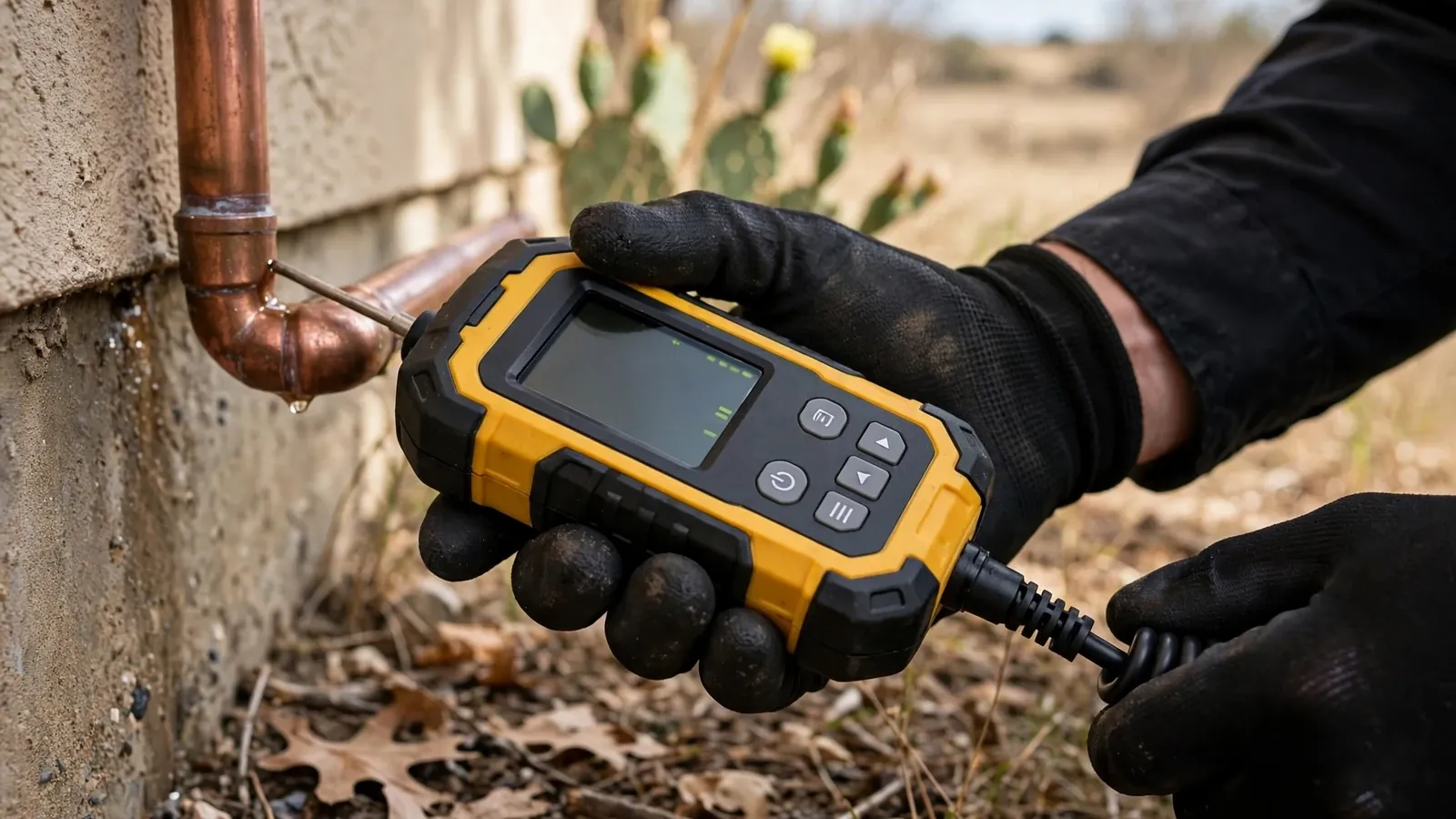
Then the plumber listens. Acoustic equipment uses a ground microphone or a contact sensor on a wall or floor, tuned to the hiss a pressurized leak makes. The sound peaks directly over the leak, which lets the plumber mark a spot a few inches wide instead of a few feet.
When sound is unclear, such as on a plastic line or in a noisy house, thermal imaging, moisture meters and tracer gas fill the gap. The table below matches each tool to the leak it handles best. A careful plumber confirms with two methods before any saw touches drywall or concrete.
Which detection tool fits which leak
Each leak hides differently, so the first tool depends on where the water is going.
| Leak type | Best-fit method | What the reading shows |
|---|---|---|
| Hot line under a slab. | Thermal imaging plus acoustic listening. | A warm band on the floor surface and a hiss that is loudest above the break. |
| Cold supply line inside a wall. | Moisture meter, then a pressure test. | A wet reading on the drywall and a gauge that sags on an isolated branch. |
| Buried yard line. | Line tracing and a ground microphone. | Sound that peaks over one spot along the traced route of the pipe. |
| Slow leak with almost no sound. | Tracer gas. | A hydrogen and nitrogen blend escapes the pipe and a sniffer at the surface picks it up. |
| Ceiling stain under a bathroom. | Thermal camera and moisture meter. | The edges of the wet area, which point back toward the source. |
| Drain line that seeps. | Camera inspection and a water or dye test. | Cracks, offsets or staining along the pipe wall. |
No method works on every pipe material or every house, which is why a first visit often combines two tools.
The meter test and the high-bill leak
A jump on the bill is the usual reason people suspect a leak, and the meter settles the question. For meter reading and bill questions, the Middletown Water Department at 302-378-2211 can explain how your usage is recorded.
The arithmetic explains the urgency. A leak of 1 gallon per minute loses 1,440 gallons a day, which is about 43,200 gallons a month, and that is roughly 12,000 pounds of water every day. A pinhole losing only a quarter of that still shows on the next bill.
- Stop all useClose every faucet and confirm the dishwasher, washer, ice maker and humidifier are idle and that no toilet is refilling.
- Read the dialFind the meter in the basement, a utility closet or an outdoor box. Note the low-flow indicator, a small triangle or star that spins with any flow, and write down the full reading.
- Wait and compareLeave everything off for 30 to 60 minutes, then read again. A changed number or a moving indicator means water is leaving through a leak.
- Split the houseClose the main valve inside the house and look at the meter once more. If it still moves, the leak sits on the line between meter and house. If it stops, the leak is indoors.
Slab leaks: warm floor spots and the sound of running water
A slab leak is a break in a pipe that runs beneath or inside a concrete floor. No standalone slab-leak page exists on this site, so everything you need sits here. The signs are physical: a warm spot on tile, carpet that stays damp along one edge, a hiss or trickle when every fixture is off, and a meter that moves during the test above.
Hot lines give the clearest clues. A leaking hot-water line warms the concrete above it, so bare feet find the patch, and the water heater cycles more often because it keeps heating makeup water. A thermal camera maps the warm band, then acoustic listening narrows it to a spot a few inches wide, which tells the plumber where to cut.
Repair choices follow the location. The plumber can break the slab and fix the pipe in place, or abandon the buried run and route a new line through the attic or walls. The second spares the floor but disturbs more of the house, so ask for both options. Permit rules vary, so ask the town permits office at 302-378-1171 whether a reroute needs one.
Treat a hot spot as urgent. Close the main if the floor is hot or the sound is loud, then call the 24/7 line. A leak that runs for weeks can soften the soil, lift flooring and feed mold, and an insurer will want photos of the warm spot and the meter.
Ceiling and wall leaks: bubbling paint and what to do while you wait
A brown ring on a ceiling, paint that bubbles or peels, or drywall that feels soft under a thumb marks water that has been moving for a while. The stain is rarely right under the leak. Water runs along a joist or pipe before it drips, so the source can sit several feet from the wet spot.
The pattern hints at the pipe type. A stain that grows only after someone showers or runs the washer points to a drain or tub connection, while one that grows steadily, even overnight, points to a pressurized supply line. A moisture meter maps the wet edges, and a thermal camera shows the cool, damp patch your eye misses.
While you wait, close the main if the stain is spreading and move furniture from beneath it. Do not paint over the mark, because fresh paint hides evidence and traps moisture. Keep clear of a ceiling that sags, since wet drywall is far heavier than dry sheets and can fall without warning.
A joint that has split outright and is pouring water is closer to burst pipe repair than to detection, and the main stays closed until it is fixed.
Under-house and crawlspace leaks
Water under the house gives few signs upstairs. Look for floors that feel springy, a musty smell, mold on joists, insulation sagging with damp, and a meter that moves when nothing is running. A flashlight at the access hatch can show drips on joints, rust streaks on hangers and wet soil below a pipe.
Pipes under a floor sit in cold air, so fittings that shifted, corroded or froze are the usual suspects. Water expands about 9 percent when it freezes, which can split a coupling that looked fine until the thaw. Moisture meters read the joists and subfloor, and a pressure test on each branch narrows the search to one line.
Stay out if water stands near wiring or a furnace, and never crawl in alone. After the pipe is fixed, drying the space matters as much as the repair, because damp joists keep growing mold long after the dripping stops.
Underground and buried line leaks in the yard
A soggy lawn patch in a dry week, a sunken stripe of turf, low pressure at every tap or a meter that moves with the house shut off can mean the line to the house is leaking. Water takes the easiest path, so the wet spot may sit well away from the break.
Locating comes first. A plumber traces the pipe route with a line locator, then uses a ground microphone to find where the hiss peaks. On quiet plastic pipe, tracer gas pushed through the line rises through the soil and is picked up at the surface.
Do not dig on a guess. Call 811 at least 48 hours before any digging, because buried gas and electric lines make a shovel dangerous. Fixing the line itself is covered under water line repair, and a suspected sewer leak calls for a camera inspection of the sewer line.
Ask the Middletown Water Department at 302-378-2211 where its responsibility ends and yours begins on your lot before you pay for any repair.
Irrigation and sprinkler leaks
A zone that stays soggy, a head that geysers, or a meter that runs only while the system is on all point to the irrigation side. A stuck valve in a buried box can leak all day with no zone running. Close the irrigation shutoff and repeat the meter test. If the dial stops, the leak is in the sprinklers.
Delaware's plumbing regulation says owners must test backflow assemblies annually, so a dripping vacuum breaker on the irrigation line is worth fixing at the same visit.
Leak repair once the spot is found
Repair follows location. An exposed copper or plastic line gets a cut-out and a new section joined with a press or solder fitting, and a worn fitting is replaced outright. Pinholes in an older run often mean more are coming, so the plumber may suggest replacing the run instead of patching it.
Much of the local housing comes from the 2000s growth wave, so original supply valves and fixture connections are likely reaching replacement age. While the line is open and pressurized, ask the plumber to check them too.
Pool, spa, yard and meter-box leaks
For a pool or spa, the bucket test separates evaporation from a leak: set a bucket of pool water on a step, mark both levels, and compare after a day or two. A pool that drops faster than the bucket is losing water through the shell or the plumbing. A plumber can pressure test the supply and return lines, but a cracked shell or liner belongs to a pool contractor.
A meter box holding standing water, or damp ground around the meter, may mean a leak on either side of it. Do not turn anything on the town side. Call the Middletown Water Department at 302-378-2211 first, since the meter is typically utility equipment, and a plumber can then work on the house side.
Shops, warehouses and rental buildings
Leak searches in a commercial building cover larger mains, more fixtures, floor drains and tenants who need notice before water is shut off. That work is described on the commercial plumbing page. Landlords of a single rental home can use this page, and should send tenants the photo checklist below.
What to document before the leak visit
- A photo of the meter dial and the low-flow indicator, with the time shown on your phone.
- Photos of stains, bubbling paint or warm floor spots with a tape measure or coin for scale.
- A note on when the sound or stain appears: only during showers, constantly, or only at night.
- The meter reading before and after your 30 to 60 minute test with everything off.
- The location of the main shutoff and whether it turns all the way.
- Your last two water bills, so the plumber can see where the jump began.
- For a rental, the landlord or manager contact so access to other units can be arranged.
The Townsend side of DE-71
Townsend sits about 7 miles south of Middletown on DE-71, and its resident page lists Artesian Water for water service. A meter or bill question from a Townsend address therefore goes to Artesian, not to the Middletown number above. Our Townsend plumbing page covers the plumbing side of that trip.
What changes the price of leak detection and repair
Detection is priced by the search, and the repair by what the plumber has to open.
Access to the pipe
A line in an open crawlspace is quicker to test than one under a finished slab or behind tile.
Size of the search area
A single bathroom branch is a smaller search than a whole house with a moving meter and no obvious stain.
Methods needed
One pressure test is simpler than a visit that adds thermal imaging, acoustic listening and tracer gas.
Depth and material of the pipe
Deep yard lines and slab runs take excavation or concrete work, while a shallow accessible fitting does not.
Repair path
Spot repair, a reroute through the walls and a full replacement run are three different jobs with three different scopes.
Home policies often cover sudden and accidental water damage but may exclude slow seepage over weeks or months. Read your policy or ask the insurer whether the cost of finding the leak is covered, and keep the photos you took.
You get a clear price before work starts, so call (410) 378-7601 to describe the leak and hear the real number.
Leak Detection: Common Questions
Do you handle leak detection emergencies at night or on weekends in Middletown?
Yes. The 24/7 emergency line takes leak calls overnight and on weekends, and a licensed plumber is dispatched for active water loss.
Close the main valve first, keep power off in wet rooms, and describe what you see when you call. Same-day appointments are offered when available for slower leaks.
How do I know if I have a hidden leak?
Run the meter test: with every fixture off, a moving dial or a spinning low-flow indicator means water is leaking somewhere.
Other signs include a bill that rose with no change in habits, a warm spot on the floor, the sound of running water at night, and stains that spread on a ceiling or wall.
How much water can a small leak waste?
A steady leak of 1 gallon per minute adds up to 1,440 gallons every day and about 43,200 gallons across a 30-day month.
Smaller leaks scale the same way. A fixture losing a few ounces a minute is slower, but over a season it still adds up to thousands of gallons.
Can a leak be found without breaking open the wall?
Usually yes, because the work is done with instruments before any cutting.
Pressure testing narrows the line, acoustic gear and thermal imaging narrow the spot, and a moisture meter confirms it. The opening that follows is typically small and sits right over the leak.
Does a slab leak mean my foundation is damaged?
Not necessarily, but a leak that runs for a long time can wash out soil under the slab.
A plumber finds and fixes the pipe. Judging cracks or settling in the structure is a job for a structural professional, and photos of any cracks help that conversation.
Will insurance pay for leak detection?
It depends on the policy, so ask your insurer before the visit.
Coverage commonly turns on whether the damage was sudden and accidental or slow and ongoing. Keep the plumber's written findings and your own photos for any claim.
Who should I call about a high bill, the plumber or the town?
Start with the meter test, then call both if the dial moves.
The Middletown Water Department at 302-378-2211 can explain how your usage is recorded, and a plumber finds the leak itself. On the Townsend side, water service is listed as Artesian Water.
Do you handle leak detection in Townsend?
Yes, the same dispatch line covers Townsend, about 7 miles south of Middletown on DE-71.
The methods are identical. Read the Townsend plumber page for the local details.
If the meter is moving and you cannot find why, call (410) 378-7601 and describe what you see.
Standards and sources
Leak work that ends in a repair falls under Delaware's plumbing regulation (16 Del. Admin. Code 4455, which adopts the 2021 IPC with state amendments). For questions about the meter, your bill or the street side of the line, the Middletown Water Department is at 302-378-2211.