
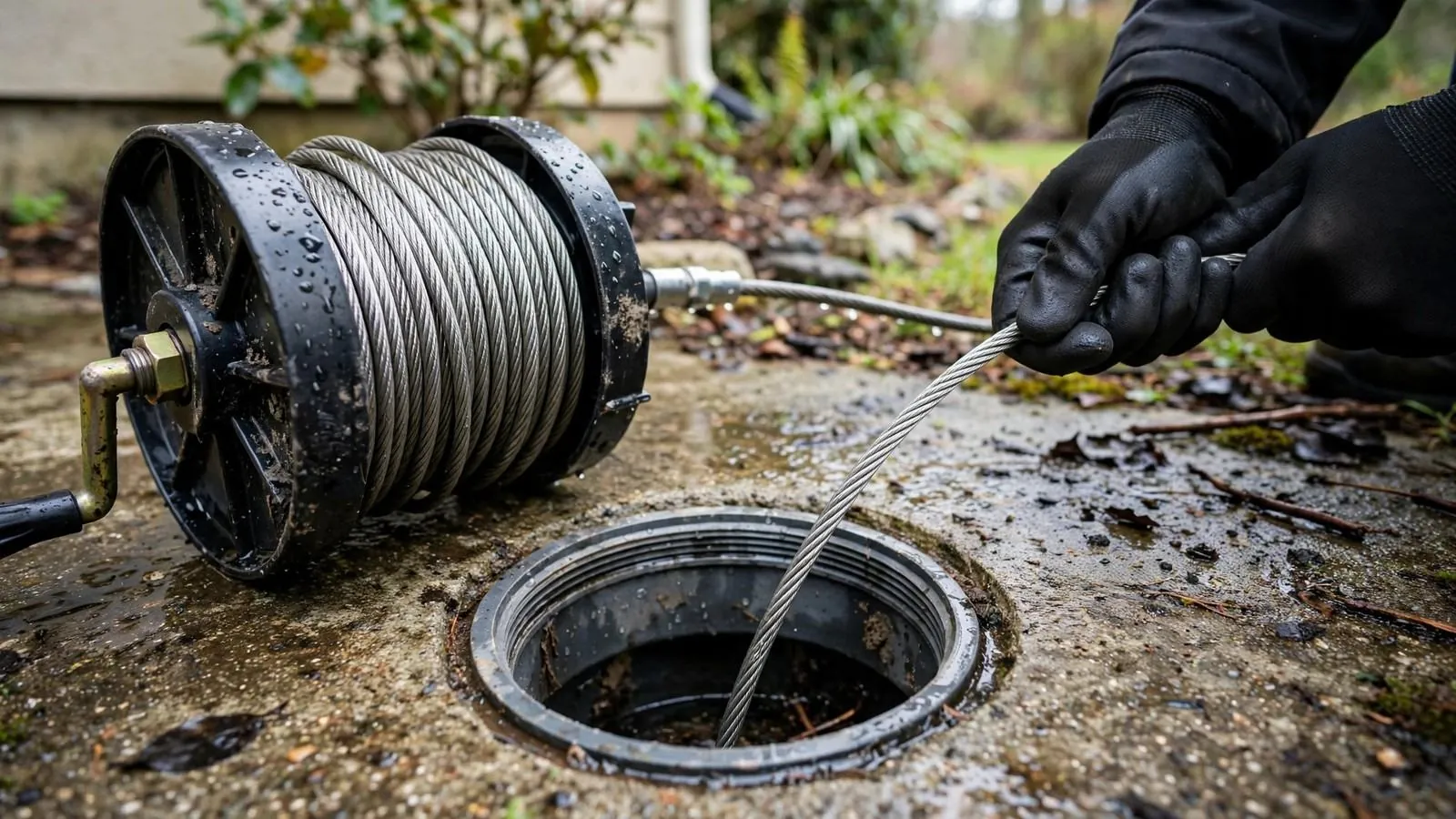
Cleaning a main line is not the same as repairing it
A cleaned main line has had its blockage removed and its wall scraped or rinsed. The pipe is exactly as sound or unsound as it was before. A repaired main line has had a cracked, offset or collapsed section replaced or lined, which is excavation or lining work and a different kind of job.
People search for sewer drain cleaning and main sewer cleaning as if they were two services. They are the same work under two names, and both begin at the cleanout, where a cable or a water jet goes down the line toward the street. The plumber feels what the tool meets: soft grease, the springy resistance of roots, a hard stop. That feel is the first clue about whether cleaning alone will hold.
If the tool hits a hard stop at a fixed distance every time, the pipe may have a defect, and sewer line repair becomes the topic. Otherwise cleaning is usually the right place to start, and the same cleanout is the entry point for the smaller jobs described under drain cleaning for single fixtures and branches.
Signs the main line is clogged
One sluggish sink rarely means a main-line problem. These signs, especially in combination, do.
- Two or more fixtures on different floors drain slowly at the same time.
- A basement floor drain or a laundry standpipe bubbles when a toilet is flushed or the washer empties.
- Gurgling comes from a toilet or tub drain when water runs somewhere else.
- A sewer smell is present near a floor drain, even though the trap is full of water.
- A toilet flushes weakly or rises toward the rim, and a plunger does not help.
- Water or sewage appears in the lowest tub or shower in the house.
Sewage coming up in the house
Wastewater in a tub, shower or floor drain is a health hazard and cannot wait for a convenient day. The 24/7 line is staffed for it, and a licensed plumber can be scheduled the same day when the schedule allows. A main-line backup spreads quickly because every fixture upstream keeps feeding it.
What to do while you wait
- Stop all water use in the house until the line is open, including toilets, laundry and the dishwasher.
- Keep everyone out of the wet area, particularly children, pets and anyone with a weakened immune system.
- Do not touch wet outlets or appliances. If you can reach the electrical panel dry, shut off power to the affected room.
- Wear rubber gloves and boots if you must enter, and wash hands thoroughly afterward.
- Open a window if the smell is strong, and leave the house and call 911 if anyone feels dizzy or ill.
Sewer backup: what it means and who to call first
A sewer backup is the main line telling you it cannot carry the flow. The flow stops at the blockage, then backs up the pipe until it finds the lowest opening, which is why the first sign is often in a basement floor drain or the ground-floor tub.
Before calling a plumber, the useful question is whether the backup is in your pipe or the town's. If neighbors report similar problems or the backup started right after a storm or street work, tell the dispatcher. The Middletown Water Department, 302-378-2211, runs the town sewer collection system and can say where its main ends and your lateral begins. For gas smells or illness, 911 comes first.
Then the plumber opens the cleanout, and checks what comes back with the first pass of the cable. Paper and wipes look different from grease, and both look different from roots. That sample points toward a cause and tells you whether a repeat is likely.
What a main-line clog points to
The cause drives the fix, so plumbers read the evidence before choosing a tool.
| Likely cause | What the plumber sees | Usual response |
|---|---|---|
| Tree or shrub roots. | Fibrous mats on the cutter, a clog that returns every few months. | Cut roots with a cable head, then consider jetting and a camera look for the entry point. |
| Grease and soap buildup. | Pale, waxy coating on the cable and a slow decline in drain speed. | Water-pressure cleaning to clear the pipe wall, plus a change in kitchen habits. |
| Wipes and paper products. | A tangled mass, sometimes with cloth fibers around the cable. | Cable removes the mass, and the household stops flushing wipes labeled flushable. |
| A belly or sag in the pipe. | Clean cable, but water still holds and clogs reform in the same place. | Camera confirms the low spot, and repair is the real answer. |
| Foreign object. | A solid item such as a toy comes out on the head. | One-time cable pass, with no change to the pipe needed. |
Why main lines clog again: roots, grease, wipes and bellies
Roots are the best-known cause. They seek out moisture, find a tiny gap at a joint, and grow into a mat inside the pipe. A cable cuts them, but the same gap lets new roots in, so the clog often returns within months to a year or two.
Grease and wipes are household habits. Grease goes down as a liquid and cools into a coating that thickens over years. Wipes sold as flushable do not break up like toilet paper, and they knot around anything rough in the pipe.
A belly is a low spot where the pipe has settled and water pools. Solids drop out of the slow water and pile up, and no amount of cleaning removes the dip itself. A line that clogs in the same stretch no matter how well it was cleaned is the usual evidence.
What the plumber does at the cleanout
The order below describes the trade in general, not a fixed script.
- Locate the cleanoutIt is a capped pipe in the basement, crawl space, garage or outside near the foundation, often 3 or 4 inches across.
- Open it slowlyA backed-up line can release water when the cap comes off, so the plumber opens it carefully and has a plan for where the water goes.
- Run the cable or jetA drum cable with a cutting or grease head clears most clogs. Water-pressure cleaning is used when grease or roots coat the wall.
- Check the flowWater runs from the house fixtures to confirm the line drains, and a camera pass may follow if the cause is unclear, as described on the sewer inspection page.
- Explain what came outYou learn whether it was roots, grease, wipes or something else, and whether the pipe needs a closer look.
Middletown homes and the likely causes
Middletown grew from 6,161 residents in 2000 to 23,192 in 2020, and much of its housing comes from that 2000s wave. In relatively young houses, a main-line clog is more often roots, grease or wipes than a pipe worn out with age. That is a pattern and not a diagnosis, because the older plumbing sits nearer the historic center and every lot is different.
Sewer service also differs by address. The Middletown Water Department, 302-378-2211, handles the town's sewer collection, while Townsend lists New Castle County Special Services at (302) 395-5700, so check your own provider before calling a utility. If you live in Townsend, see plumbing service in Townsend.
What changes the price of sewer line cleaning
Price depends on the work the line needs, not on how upsetting the backup is.
Cleanout access
A good cleanout makes a clean job. Without one, the plumber may pull a toilet or work from a roof vent.
Distance to the blockage
The farther the clog sits from the access point, the more cable and time are involved.
Tool required
A drum cable fits most clogs. Heavy root mats or hard grease may call for water-pressure cleaning.
Camera follow-up
Looking at the pipe after cleaning adds a step and shows whether the clog will return.
Cause found
A foreign object is a one-time fix. Roots or a belly lead to maintenance plans or repair work.
Standard homeowners coverage often excludes damage from a sewer or drain backup unless you added a specific endorsement, and clearing a clog is usually maintenance. Check the policy or ask the insurer, and keep the photos of any damage.
Call (410) 378-7601 and describe what the drains are doing, and ask for a clear price before work starts.
Sewer Line Cleaning: Common Questions
Do you handle sewer line cleaning emergencies at night or on weekends in Middletown?
Yes. The 24/7 emergency line is answered at night and on weekends, and a licensed plumber can be sent with same-day appointments when available.
Main-line backups spread through the house, so stop using water and keep people away from the wet area until the line is open.
What is the difference between sewer line cleaning and sewer line repair?
Cleaning removes a blockage and leaves the pipe as it was. Repair replaces or lines a damaged section. A plumber can usually tell which you need after cabling and a camera look.
Can I clear a main sewer line myself?
A small hand snake cannot reach or clear a 4-inch main. Opening a cleanout on a full line also releases wastewater. It is safer to leave the work to a plumber.
Why does my floor drain gurgle when I do laundry?
The washer pushes a large volume of water into a main line that is partly blocked. The air and water have no place to go but the lowest opening, which is often the floor drain.
How long will a cleaned main line stay clear?
It depends on the cause. A foreign object may never recur, while roots or grease can bring a clog back within months. The plumber can tell you what the cable brought up.
Will flushable wipes clog a main line?
Often, yes. They do not break down as paper does, and they snag on rough spots or roots in the line, where they gather into a mass.
Do I need a camera before cleaning?
Not always. A first clog with an obvious cause may only need cabling. A repeat clog or a cable that stops hard calls for a camera look.
If several drains are slow or sewage is rising, call (410) 378-7601 and tell the dispatcher what you see.
Standards and sources
Cleaning a main line is maintenance, while a repair falls under 16 Del. Admin. Code 4455, the Delaware plumbing regulation built on the 2021 IPC. The Middletown Water Department runs the town's sewer collection system and can say where its main ends, at 302-378-2211.