
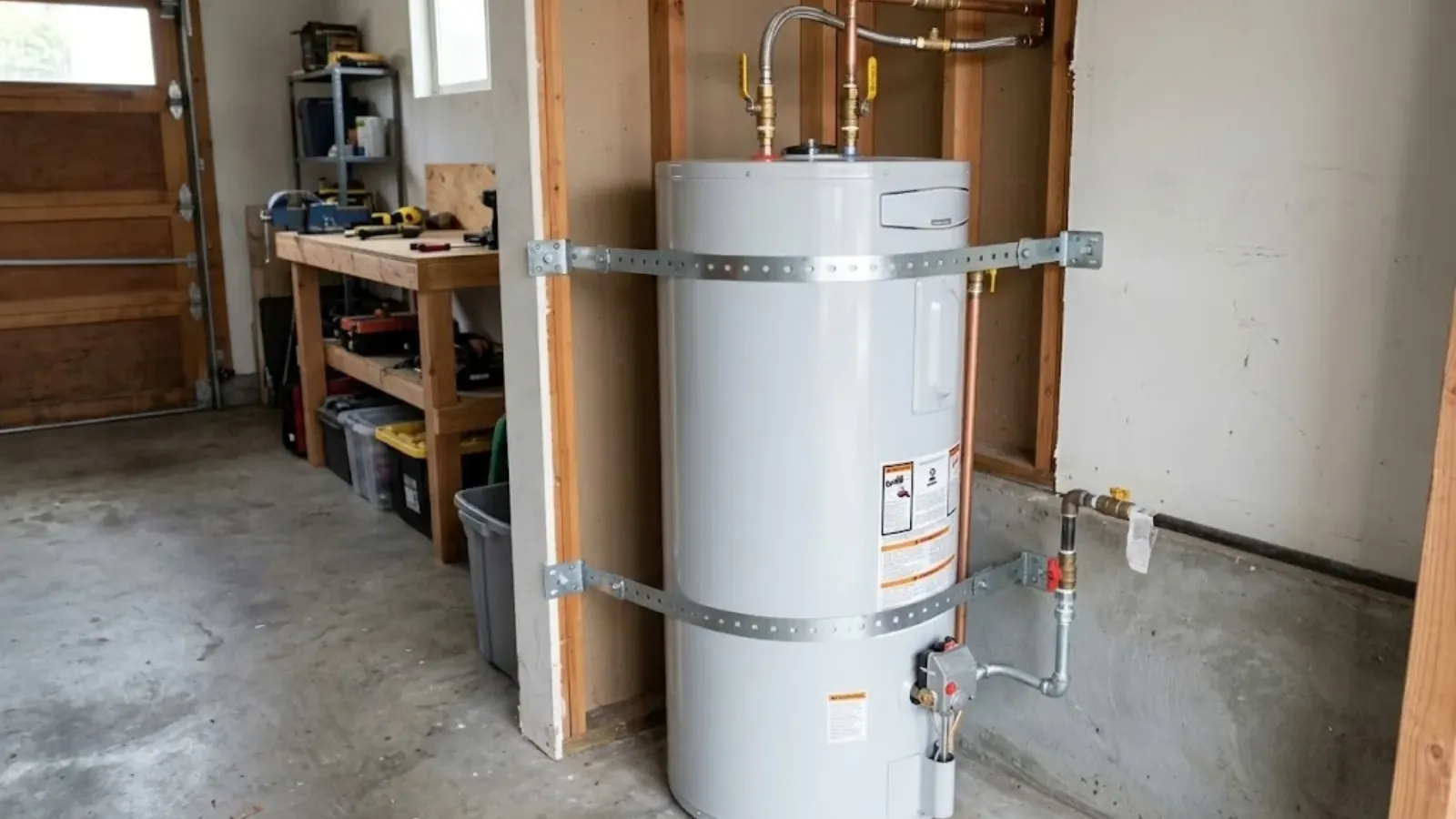
The site check comes before the heater
The plumber starts by looking at where the unit will live. Floor drain or none, ceiling height, distance to the flue, size of the gas line, nearby electrical capacity and the path the old tank takes out are all checked before a new one is ordered. Skipping that look is how a 50 gallon tank ends up too tall for the closet.
Take a photo of the existing rating plate and the piping layout. If the old heater was a fit, a like-for-like swap is simple. If the house has changed since, the plumber tells you what has to change with it.
What a proper install includes
A tank in the corner is the visible part. These are the pieces that make it safe to run.
- Shutoff valves on the cold supply, so the heater can be isolated without closing the whole house.
- Dielectric unions or flexible connectors where copper meets the steel tank, to slow corrosion.
- A temperature and pressure relief valve with a discharge pipe routed to a safe, visible spot.
- An expansion tank where the system needs one, to absorb pressure as heated water grows.
- A drain pan under the tank when it sits where a leak would damage finished space.
- Venting for gas units, sized and sloped for the flue, with combustion air available to the burner.
- A correctly rated circuit and disconnect for electric units.
- The thermostat set to a typical 120 degrees F, then confirmed at a nearby tap.
Fuel type and what each install asks of your house
The heater type decides which pieces of the checklist matter most.
| Type | What the house must provide | Common surprise |
|---|---|---|
| Electric tank. | A dedicated circuit and breaker of the right rating. | An older panel with no spare capacity. |
| Gas tank. | A gas line, a vent path and air for the burner. | A flue that no longer fits the new unit. |
| Heat pump tank. | Electric supply, open airspace and a condensate drain. | A closet too small for the airflow. |
| Tankless gas. | Larger gas line, new venting and a drain for scale flushing. | Existing gas pipe sized for a smaller load. |
| Tankless electric. | Heavy electrical service on its own circuit. | Panel upgrade needed before the unit goes in. |
Ask the plumber to name which row you are in, so the surprises show up before install day.
How an install day runs
Each house differs, but most installs follow the same order.
- Shut off and drainWater, power or gas are turned off, and the old tank is drained and disconnected.
- Remove and prepareThe old unit is carried out and the area is cleaned. Corroded valves or supply lines are replaced.
- Set and connectThe new unit is leveled, then piped, vented or wired. The relief valve and its discharge pipe go in.
- Fill and testThe tank fills before power or gas goes on, so elements do not burn dry. The plumber checks every joint for drips.
- Light or energize and verifyThe unit is started, the temperature is checked at a tap, and the flue draft is confirmed on gas models.
Licensing, and what Delaware says about the piping
Delaware requires a Delaware license to do plumbing work, even for someone licensed in another state. The Board of Plumbing, Heating, Ventilation, Air Conditioning and Refrigeration Examiners sits under the Division of Professional Regulation. You can verify any license at delpros.delaware.gov before work begins.
The state plumbing regulation, 16 Del. Admin. Code 4455, adopts the 2021 International Plumbing Code with state amendments. Those amendments address water heater piping, relief valves and expansion tanks. Ask the plumber how each of those was handled on your job.
The permit question
The town of Middletown publishes a Plumbing Permit Application, and its code official inspects each phase of permitted work. The town page does not say which plumbing jobs need a permit, so the honest answer is that permit rules vary. Ask the permits office at 302-378-1171, open 8 a.m. to 4 p.m. in person, with phone service until 4:30 p.m.
Contractors doing building or reconstruction work must be licensed with the town. If you rent a home to someone else, it also has to be inspected before occupancy. Both points can matter if you are a landlord.
Choosing between a tank and a tankless install
Most installs here are tank for tank, because the pipes, vent and space are already set for it. A tankless unit suits some households, but it often calls for a bigger gas line, new venting or heavier electrical service, so the install is a larger project.
Middletown's housing is largely from the 2000s growth wave, so original heaters are reaching replacement age across many neighborhoods. If yours is one of them, the plumber can show you what a like-for-like replacement involves versus a change in type.
What to do on day one and with the old unit
Your old heater leaves with the plumber, and the new one should earn its trust on day one.
- Run the hot tap and confirm warm water reaches it, then check again an hour later.
- Look at every joint and valve for beads of water, and wipe them dry to be sure.
- Confirm the relief valve discharge pipe is dry and points to a safe place.
- On gas, check that the flame is steady and blue, and that no odor lingers.
- Keep the plate details and any paperwork the plumber leaves, along with the date.
- Ask where the old tank is going, since disposal should be part of the visit.
What changes the price of a water heater installation
Installs fall into a few price bands, but the details decide where yours lands. You get a clear price before work starts.
Unit type and capacity
A larger tank, a heat pump model or a tankless unit costs more than a basic 40 gallon tank.
Changes to piping, vent or wiring
A new flue, a longer gas run or a circuit upgrade adds parts and labor.
Code-related extras
Expansion tanks, relief valve discharge piping and drain pans add items to the job.
Access and removal
Stairs, tight attics and heavy old tanks affect how long the swap takes.
Permit steps
Where the town requires a permit, someone must file it and schedule inspection.
Insurance does not usually pay for a planned upgrade. If you are installing because a leak damaged your home, the water damage may be covered even though the heater itself is not. Check your policy.
Call (410) 378-7601 to book an install date and get your price in writing before the work starts.
Plumbing beyond the heater
A water heater install often reveals a tired shutoff valve or a stiff old supply line. Fixing those during the same visit costs less than coming back later. For related work, see our notes on installing new fixtures and lines. Townsend homeowners about 7 miles south can find the same service on the Townsend page.
Water Heater Installation: Common Questions
How long does a water heater installation take?
It depends on the type and the house. A like-for-like tank swap is a smaller job than a conversion or tankless install. The plumber can describe the scope after the site check.
Do I need an expansion tank?
Delaware's amendments to the plumbing code address expansion tanks, so ask the plumber whether your system needs one. A closed system with a backflow device or pressure reducing valve often does.
Will the plumber remove my old water heater?
Yes, removal is part of a standard install. Confirm it when you book, and ask where the tank goes.
Does a water heater install need a permit in Middletown?
Permit rules vary, so ask the town permits office at 302-378-1171. The town publishes a Plumbing Permit Application, but does not list which jobs need it.
How do I know my installer is licensed?
Delaware requires a state license for plumbing work. You can verify it at delpros.delaware.gov. We dispatch licensed Delaware plumbers.
Planning your install? Call (410) 378-7601 to talk through the site and the schedule.
Standards and sources
The installation details on this page follow the idea behind the state amendments to the IPC in 16 Del. Admin. Code 4455, which cover water heater piping, relief valves and expansion tanks. Delaware also requires a Delaware plumbing license for the work, and you can verify one at delpros.delaware.gov.