
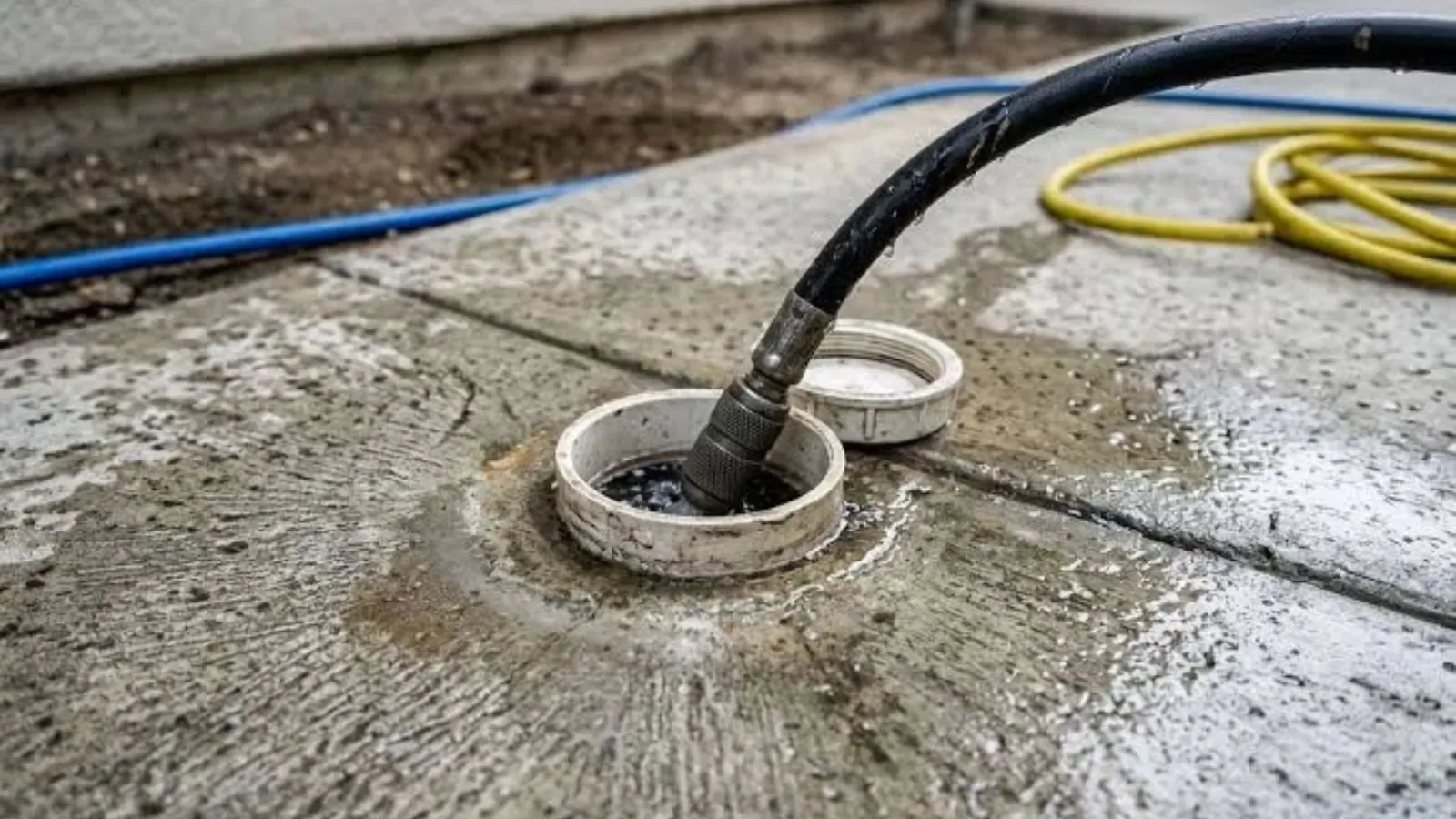
A line that was snaked and clogged again
A cable machine spins a cutting head through the clog and leaves a channel. That is fine for a one-time blockage like a toy or a wad of paper. It is a poor fit for grease or mineral buildup, because the channel is narrow and the rest of the coating stays on the pipe. Water, soap and new grease soon narrow it again, and the symptom returns in weeks.
A jet attacks the coating itself. Forward and rear nozzles spin water around the full inside circumference, so a 4-inch pipe gets its whole wall washed rather than one hole through the middle. The debris flushes downstream with the water. When people say a line cleaned by a jet stays clear longer, this is the reason, though how long depends on what caused the buildup in the first place.
If you already paid for a cable cleaning and the same fixtures backed up again, say so when you call. The visit history tells the plumber that a straight repeat of the same service is probably not the answer. The basic version of that service is explained under drain cleaning with hand augers and cable machines.
What to do while you wait for a backup to be handled
A backup that is coming up through a floor drain, tub or toilet cannot sit until Monday. The line is answered 24/7, and a licensed plumber can usually be scheduled for the same day when the schedule allows. A jet truck or trailer unit is heavier equipment than a cable, so tell the dispatcher about access: where the cleanout is, and whether a vehicle can reach it.
What to do while you wait
- Stop using sinks, showers, the washer and the dishwasher. Each one adds water to a pipe that is already full.
- Do not flush, since a toilet that overflows is the worst place for the water to go.
- Shut the main water valve if water keeps flowing from a fixture or supply line. Every household has one, usually where the line enters the house.
- Block off the area and move electronics, cardboard and rugs out of reach of the water. Keep children and pets out of the room.
- Take photos of the water level and the affected area with the date visible, which helps with a landlord or insurance claim.
Roots, grease and a snake that stopped partway
The situations below are the ones where plumbers most often move from a cable to a jet.
| Situation | Why a cable fell short | What jetting adds |
|---|---|---|
| Line clogged again within weeks. | It opened a narrow channel and left coating on the wall. | Washes the full circumference so the pipe returns to its working diameter. |
| Fine roots at a joint. | A cutter trims the root but leaves the stub, which regrows. | Strips the fine root fibers and flushes them out, though it does not seal the joint. |
| Heavy grease on a kitchen or restaurant line. | The cable bores through grease that closes up again behind it. | Hot-water-assisted pressure breaks grease down and rinses it toward the main. |
| Cable stopped partway and will not advance. | Something solid, a bend or a break may be in the way. | Often unwise until a camera shows what the cable hit. |
| Scale or sludge in an older iron or clay line. | A cable scrapes only one stripe of the pipe. | Removes loose scale, but brittle pipe may not tolerate it. |
The last two rows are the ones where plumbers stop and look rather than push harder.
What jetting does not do, and why the camera goes first
Water pressure cleans a pipe. It does not repair one. A cracked, offset or collapsed section stays cracked, offset or collapsed after the jet passes, and strong pressure can make a weak spot worse by forcing water and debris into the soil around a break.
That is why a snake that stopped partway is a warning and an obstacle at once. If the cable hit a hard stop at 40 feet, a plumber will want to see that spot before sending a hose with pressurized nozzles into it. The tool for that is a camera inspection of the sewer line, which shows the pipe wall, any roots entering, and the point where the line changes.
If the camera shows a break, a belly that holds water or a section pushed out of alignment, the answer is sewer line repair. Cleaning such a line may still be worthwhile to restore flow temporarily, and the plumber will say so honestly instead of selling a jet as a cure.
Residential lines versus commercial lines
A house usually has a 4-inch main line and a handful of small branches. One cleanout, one hose and a short session cover most homes. The usual causes are tree roots, a build-up of grease and wipes that do not break up.
Commercial lines are larger, run longer and carry heavier loads. A restaurant sends fryer oil and food solids through a grease trap, and a laundry sends lint. Middletown has chain stores along the US-301 corridor, reached from the DE-299 and DE-71 exits, and commercial buildings in town. These sites often have floor drains and shared building lines, so a jet job can involve a property manager as well as an owner.
Plumbing for stores and restaurants gets more detail on the commercial plumbing page. For either kind of property, the first call should include the size of the line, the location of the cleanout and any past stoppages.
How a hydro jetting visit typically runs
Details vary by plumber and by site, but the usual order looks like this.
- Find the accessThe plumber locates a cleanout, or removes a toilet or opens a vent if none exists, and decides the right hose and nozzle for the pipe diameter.
- Run a test passA cable or a camera often goes in first to confirm the line is intact, because a jet should never go blind into pipe of unknown condition.
- Jet in both directionsThe nozzle moves forward to the blockage, then pulls back while spinning to scour the wall. Water and loosened debris flow to the sewer.
- Check the resultRunning water, and often a camera pass, show whether the pipe is open and clean, or whether damage was hidden under the buildup.
- Explain the findingsThe plumber tells you what was in the pipe and whether roots, grease or a defect is likely to bring the clog back.
Where the town sewer ends and your pipe begins
Before you pay for any cleaning near the street, ask the Middletown Water Department at 302-378-2211 where the town sewer main ends and your lateral begins. The department runs the town's sewer collection system, and the answer tells you whether a stoppage at the property line is yours to fix or the town's to hear about.
Townsend, about 7 miles south on DE-71, lists a different sewer provider, so Townsend plumbing service follows a separate call. Either way, tell the plumber what the utility said.
What changes the price of hydro jetting
Jetting is priced by the work involved, and the plumber should be able to explain each part before starting.
Pipe diameter and length
A 4-inch house line is a smaller job than a long run under a parking lot, and the longer the hose, the more water and time involved.
Access point
A cleanout at ground level is quick to use. A toilet pull or roof vent takes longer and carries some risk of fixture damage.
Camera inspection
Checking the line first adds a step, but it protects against jetting a damaged pipe.
Equipment needed
A small portable jetter and a trailer-mounted unit are different machines with different costs to bring and operate.
Severity of the buildup
Light film comes off quickly. Heavy root mats or packed grease may need multiple passes.
Most homeowners policies treat cleaning a clogged line as maintenance and do not pay for it. Damage from a sudden backup is sometimes covered under a separate endorsement. Read the policy or ask your insurer before assuming.
Call (410) 378-7601 to talk through your situation, and the plumber will give you a clear price before work starts.
Hydro Jetting: Common Questions
Do you handle hydro jetting emergencies at night or on weekends in Middletown?
Yes. The 24/7 emergency line is answered nights and weekends, and a licensed plumber can be dispatched with same-day appointments when available.
Jetting equipment is heavier than a cable machine, so give the dispatcher your cleanout location and any past stoppages. Meanwhile, stop using water in the building.
Is hydro jetting safe for my pipes?
It is safe for sound pipe in good condition. A cracked, collapsed or very brittle line is the risk, which is why a camera look often comes first. Newer PVC and cast iron in decent shape handle it well.
How is hydro jetting different from snaking?
A snake or cable pushes a cutting tool through the middle of the clog. A jet uses water pressure to wash the whole pipe wall. Cabling opens a path and jetting cleans the pipe.
Will jetting remove tree roots for good?
No. It clears the roots inside the pipe, but they grow back if they still have a way in. A joint or crack that lets roots enter needs repair to stop the cycle.
Can I rent a jetter and do it myself?
Consumer pressure washers with a drain hose exist, but they are far weaker than professional units. Without a camera you may push debris deeper or hit a break you cannot see.
What do I do if my line is full and I cannot reach the cleanout?
Stop using water and call. A plumber can find another access point, such as a toilet flange or a roof vent, and tell you what to expect before starting.
Does jetting work on a restaurant grease line?
Yes, and it is a common use. Grease traps still need regular pumping, because jetting moves the grease along but a full trap just refills the line.
If a line has clogged more than once, call (410) 378-7601 and ask whether jetting or a camera look fits your pipe.
Standards and sources
Jetting a line does not change what the Delaware plumbing regulation (16 Del. Admin. Code 4455, based on the 2021 IPC) requires of the pipe afterward. If a camera shows a cracked or collapsed section, repair work falls under that regulation and a licensed Delaware plumber.