
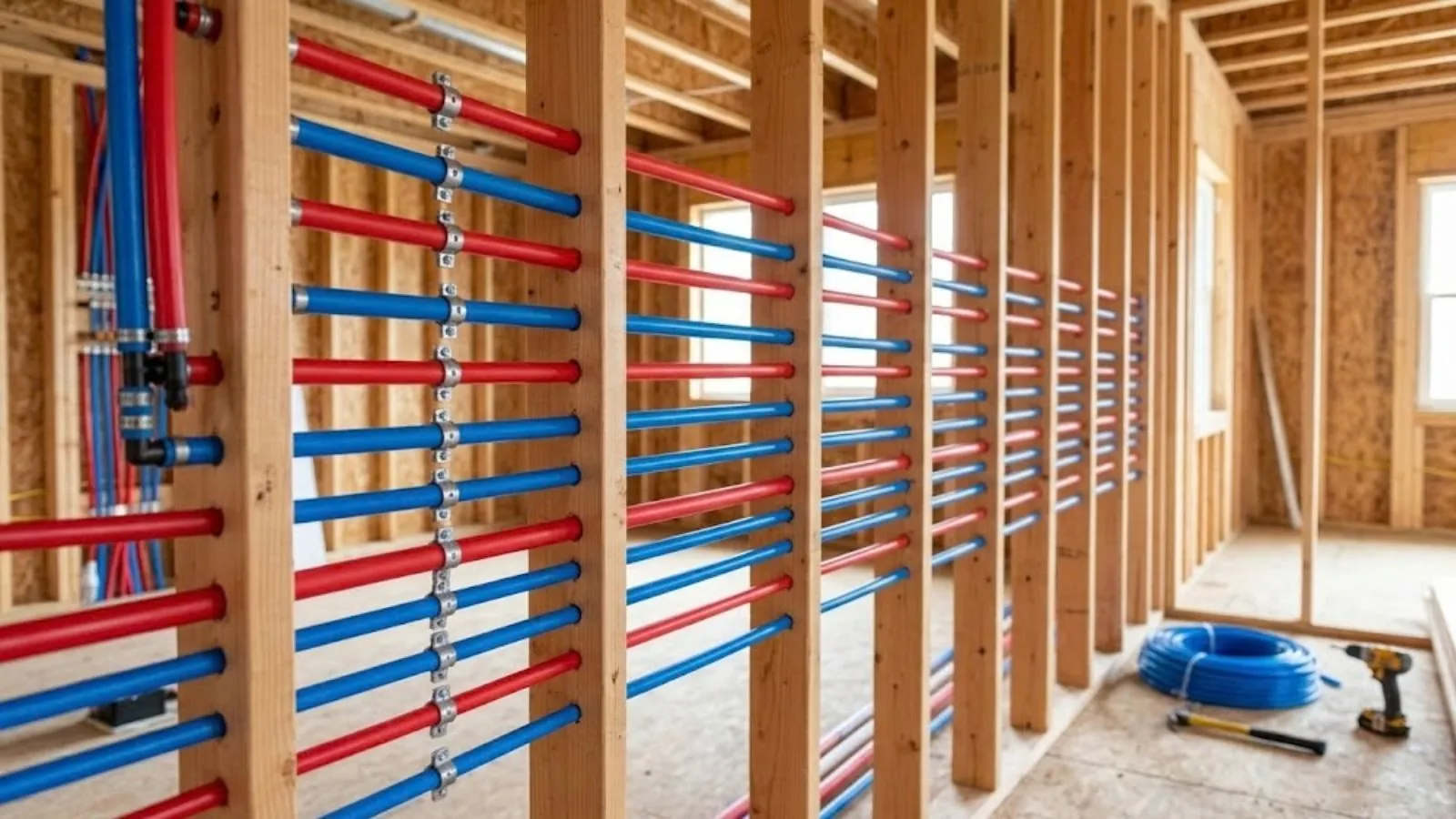
Six signs the pipes are failing, and it is more than one joint
One leak does not condemn a house. A pattern does. Write down dates and locations as you notice each item below, because a plumber reads the pattern from your notes faster than from memory.
- A second or third pinhole leak in different rooms, which suggests the pipe wall is thinning along its whole length and not at one bad fitting.
- Brown or orange water for several seconds after the house has sat overnight, then clear water, a common sign of rust forming inside steel or iron pipe.
- Pressure that drops at several fixtures at once, often because corrosion has narrowed the inside of old pipe from three-quarters of an inch toward a pencil-sized opening.
- Flaking, orange crust or white mineral buildup at threaded joints you can see in a basement, utility closet or under a sink.
- Stains or soft drywall in more than one room with no shared cause such as a roof leak.
- A water bill that climbs while the number of people in the house stays the same.
Partial repipe or whole house: how to decide
A partial repipe replaces one run, such as the line serving a bathroom group or the stretch of pipe under a kitchen. It fits when failures sit in a single branch and the rest of the pipe is a different age or material, which a plumber can often confirm by opening one access point and looking.
A whole-house repipe makes more sense when leaks are scattered, when pressure is poor everywhere, or when old and new sections keep failing where they join. The trade-off is plain. A partial job usually costs less on day one and may bring you back for another, while a whole-house job opens more walls once and ends the guessing.
Before you choose, find out where water is actually escaping. Acoustic and thermal leak detection for hidden pipe leaks can locate a failure inside a wall so the repair scope matches what is wrong instead of what is feared.
If a pipe has already split and water is spreading, shut the main and treat that as a burst pipe repair first. The repipe conversation can wait until the house is dry.
PEX, copper or CPVC: honest trade-offs
Each material has a place. The right one depends on your layout, your tolerance for open walls and what the plumber finds when the old pipe comes out.
| Material | Where it does well | Trade-offs to weigh |
|---|---|---|
| PEX. | Flexible tubing that bends around corners, so it can often be fished through walls with fewer openings and fewer joints. | Sunlight damages it, so it stays indoors or covered. New plastic can give water a taste until flushed, and it is not meant for hot, exposed locations. |
| Copper. | A long track record, a rigid line that holds its shape and no damage from sunlight. | Soldered joints mean flame work near framing. Material often costs more, and some water chemistry can pit the pipe wall over the decades. |
| CPVC. | Rigid plastic with glued joints, rated for household hot water and light enough to carry easily. | It can turn brittle with age and heat, and rigid runs crack more readily than flexible tubing when stressed or frozen. |
| Patch only. | A short repair when one section has failed and the rest tests sound. | It does nothing for pipe that is thinning elsewhere, so a second leak may follow within months or years. |
Nothing on this page says what is inside your own walls. Have the plumber identify your existing pipe in person before anyone prices the job.
Galvanized steel: why it clogs from the inside
Galvanized pipe is steel with a zinc coating. After decades the coating wears and rust builds on the inside, so water squeezes through a smaller opening each year. That is how a house loses pressure at the upstairs shower first and then everywhere.
You can test an exposed section yourself. A magnet sticks to galvanized steel but not to copper or plastic, and a light scratch with a key on a hidden spot shows gray metal instead of the reddish color of copper. If the magnet grabs, galvanized replacement belongs on your list, and the plumber will check how far the steel runs.
How a repipe job unfolds from walkthrough to final test
Every house is different, yet the order of work is fairly steady.
- Walkthrough and scopeThe plumber identifies the pipe material, checks the main shutoff and pressure, and maps where each run travels.
- Access planningSmall openings are chosen in closets, behind fixtures or along basement and attic runs, wherever patching will be easiest.
- Water off, old out, new inThe system is drained, old lines are cut out or abandoned, and new lines are run to each fixture, the water heater and every shutoff.
- Pressure test and inspectionNew lines are pressure-tested while walls are still open. If the work is permitted, the town code official inspects each phase.
- Restore and flushWater returns, air is purged from the lines and each fixture is checked for drips. Drywall patching and paint are usually a separate trade, so ask who handles them.
Drywall, access and the stretch without water
Plumbers cut small, planned openings and try to place them where a patch will hide. Flexible tubing can reach through a wall from one opening, while rigid pipe often needs more cuts. Ask for the opening locations in advance and decide which rooms you would rather keep untouched. If you are also adding a bathroom or moving a kitchen, new fixtures and rough-in can be planned while the walls are open.
In plain terms, the water is off while old lines come out and new lines connect. We will not promise a duration here, because it depends on the size of the house, how easy the access is and when an inspection can be scheduled. Ask whether the work can be staged so one bathroom or the kitchen has water at the end of each day.
Plan to fill containers ahead of time. A gallon weighs 8.34 pounds, so a five-gallon jug is about 42 pounds, and two of them cover a lot of handwashing and toilet flushing.
What the town says about lead, and why a repipe invites the question
The Middletown Water Department's water quality report says lead in drinking water comes mainly from service lines and home plumbing, and that the town cannot control what materials are used inside homes. A repipe is the moment to ask what is in your walls. The town keeps a lead service line inventory, so call the Water Department at 302-378-2211 and ask about your address.
Until you know, the town advises flushing a tap for 30 seconds to 2 minutes after water has sat for several hours, before you drink or cook. A repipe covers pipes inside the house only. If the trouble is the buried line between the meter and your foundation, that is a water line repair outside the house and a separate job.
Permits, inspections and licensing: what to ask the town
Permit rules vary, so ask the town permits office whether a repipe at your address needs a Plumbing Permit Application. Permits, Licensing and Inspections is at Town Hall, 19 W. Green Street, phone 302-378-1171, open in person from 8 a.m. to 4 p.m. and by phone until 4:30 p.m. The town says the code official inspects each phase of permitted work, and fee amounts are not listed on its page, so ask about fees in the same call.
Delaware requires a Delaware license for plumbing work, even from someone licensed in another state. You can check any license yourself with the state's Verify License Online tool at delpros.delaware.gov.
Townsend has its own town hall at 141 Main Street, (302) 378-8082, and this page cannot say what applies there. We also dispatch to Townsend, about 7 miles south on DE-71, and a licensed plumber for Townsend, DE can walk through the job with you.
Before the plumber arrives for a repipe
- Find your main water shutoff and turn it once to confirm it moves, then tell the plumber if it sticks.
- Clear three feet around closets, the water heater, under sinks and any attic or crawlspace hatch.
- Photograph every stain, leak and the water meter reading, which helps with an insurance claim and with the plumber's scope.
- Move wall art, shelving and valuables out of rooms where openings are planned.
- Fill containers with drinking and flushing water and decide which bathroom you will use.
- Call the town permits office at 302-378-1171 with your address and ask whether a permit applies.
- Ask who patches and paints the drywall, and get that answer before work starts.
What changes the price of a repipe
No honest number can be given without seeing the house. These factors move it the most.
Size and fixture count
More bathrooms, more kitchens and more hose connections mean more pipe, more fittings and more labor.
Access
An open basement or attic is faster to work than a slab house or a finished second floor with tight chases.
Material choice
PEX, copper and CPVC differ in material cost and in how much labor each needs per run.
Permit and inspection steps
If the job is permitted, inspection stages affect scheduling and sometimes how long walls stay open.
Related replacements
Shutoff valves, a pressure regulator or old fixtures found during the work may be worth replacing while the walls are open.
Home insurance often covers sudden and accidental water damage, such as a pipe that bursts, but usually not replacement of pipe that has worn out with age. Read your policy or ask your insurer, and keep photos and dates of every leak.
For a real number tied to your house, call (410) 378-7601 and describe your pipes, your leaks and how many bathrooms you have.
Repiping: Common Questions
How do I know whether I need a repipe or just a repair?
Repeated leaks in different places, widespread rust-colored water and low pressure at many fixtures point toward a repipe, while a single leak with otherwise healthy pipe points toward a repair.
A plumber can confirm by checking the pipe material, testing pressure and finding out whether the failures cluster in one run or spread across the house.
How long will the water be off during a repipe?
It depends on the house, so no honest number can be promised here. Size, access and inspection scheduling all change it.
Ask for a staged plan so one kitchen or bathroom has water at day's end, and store drinking water in advance.
Will a repipe improve my water pressure?
It can, when old pipe has narrowed from corrosion and new lines restore full flow. A repipe does not raise pressure that is low at the street or set too low at a regulator.
A pressure test before the job separates a clogged-pipe problem from a supply problem.
Does a repipe remove lead from my water?
Only if lead-bearing materials exist inside the house and get replaced, and it never touches the service line from the street.
Call the Middletown Water Department at 302-378-2211 and ask about the town's lead service line inventory for your address. Flushing a tap for 30 seconds to 2 minutes after the water has sat also helps.
How do I get a whole-house repipe estimate?
Call and describe the house, the number of bathrooms and where the leaks have been, and we send a licensed plumber to look at the pipes in person.
You get a clear price before work starts. A number given over the phone without a look at the pipe would be a guess.
Is galvanized pipe replacement a different job from a repipe?
It is the same family of work. Galvanized replacement is a repipe aimed at steel supply lines that are rusting from the inside.
The scope can be partial if only part of the house has steel, and a magnet test on exposed pipe is a quick first clue.
If your pipes are showing the signs above, call (410) 378-7601 and a licensed plumber will come look at the house with you.
Standards and sources
Repiping is plumbing work that Delaware's regulation (16 Del. Admin. Code 4455, the 2021 IPC with state amendments) covers, and the town says each phase of permitted work is inspected. The town's water quality report notes that lead comes mainly from service lines and home plumbing.