
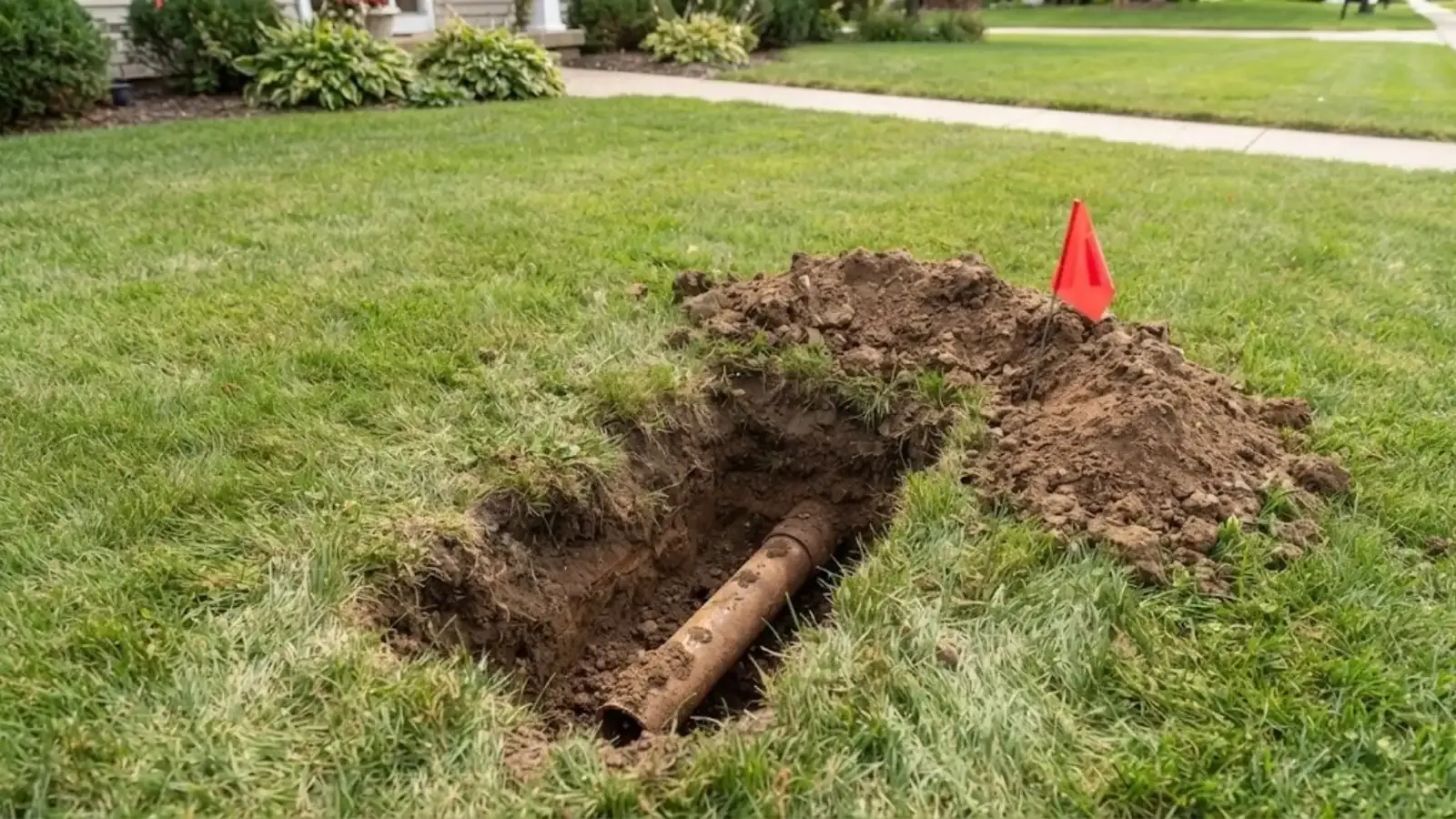
When sewage is coming back up into the house
Wastewater in a tub, shower or floor drain is an emergency because it carries bacteria and keeps rising while anyone in the house uses water. The sewer line repair line takes calls around the clock, nights and weekends included. Say how many fixtures are affected and whether water is still rising, so the dispatcher can send the right plumber with the right equipment.
Do what you safely can until the plumber arrives.
What to do while you wait
- Stop using sinks, toilets, the shower, the dishwasher and the washing machine, since every gallon you run has nowhere to go.
- Keep children and pets out of any room with standing wastewater, and do not wade through it barefoot.
- Stay away from outlets, power strips and appliances that sit in or near the water, and leave the electrical panel alone if reaching it means standing in a wet area.
- Skip chemical drain openers. They pool in a full line, burn skin, and make the plumber's work riskier.
- Photograph the water level, the affected rooms and any damaged belongings before cleanup starts, for your insurer or landlord.
- If anyone smells gas, leave the building, call 911, then call the gas utility.
Finding the break with a camera before any digging
A sewer camera is a waterproof lens on a flexible rod, pushed into the line through a cleanout or a pulled toilet. It shows the pipe wall live, so the plumber can see roots, a crack, a joint that has slipped apart, or a low spot where water pools.
Ask for the distance in feet from the access point to each defect, because that number decides where a trench would start. A recorded camera inspection of the sewer line also leaves you footage to keep, which helps with a second opinion or an insurance claim.
Sometimes the lens cannot pass. A pipe the camera stops short in usually has a break, a collapse or a heavy offset at that distance. That stop is itself a finding, and a surface locator can mark the spot above it so the dig is small and planned.
Cleaning often comes before scoping, because grease and scale hide the wall. Clearing the line first gives a true picture. If the same pipe clogs again within a few weeks, the cause is structural and the debris was only the symptom.
Spot repair or full replacement: how the choice gets made
The camera footage, not a rule of thumb, decides how much pipe needs work. These are the common situations and the trade-off in each.
| What the camera shows | Usual option | Trade-off |
|---|---|---|
| One cracked pipe or a single failed joint, the rest of the run sound. | Dig to that spot and replace the bad section. | Smallest excavation and least yard damage, but any other weak spot in the run stays as it was. |
| Roots entering at several joints along the run. | Cut the roots, then line the pipe or replace the run. | Cutting alone is short-lived because roots regrow into open joints, while a liner or new pipe closes them. |
| A long stretch that sags and holds water. | Replace that stretch at the correct slope. | A liner follows the existing shape and cannot lift a dip, so a belly usually means new pipe. |
| Old cast iron that is flaking, cracked or heavily scaled. | Line it or replace it, depending on wall condition. | Lining avoids a trench but needs a pipe sound enough to carry the liner. |
| A collapsed section the camera cannot pass. | Open-cut replacement of the collapsed length. | Lining and spot tools cannot cross a collapse, so a trench is typically unavoidable. |
A plumber who recommends a full replacement should be able to show you the footage that supports it.
Roots, bellies, offsets and cracks
Roots find a sewer joint because it leaks a little moisture and nutrients into the soil. A hair-thin root enters, thickens into a mat, and catches paper until the line stops. Cutting gives relief for months, not years, unless the opening it grew through gets sealed.
A belly is a low spot where soil has settled under the pipe. Water stays in the dip, solids settle out of it, and the clog returns on schedule. An offset is where two pipe ends have slid sideways, leaving a ledge that snags anything moving past.
A cracked pipe may leak sewage into the soil for a long time before a backup shows up. Signs include a lush green strip in the lawn, a damp patch with a smell, or a drain that slows after heavy rain. If the leak you are chasing is clean water instead, that is a supply problem, and burst pipe repair covers it.
Sewer backup: when the main line is the problem
One slow fixture usually means a local clog in that fixture's own branch. Water backing up in the lowest drains, or a tub that fills when you flush a toilet, points to the main line. A quick test helps: run a faucet on the highest floor and watch the basement floor drain or the bathtub nearest the foundation. If water appears there, the blockage sits downstream of every branch.
A main line can be blocked by grease, wipes, roots or a broken pipe. The first three are cleared with a cable or with hydro jetting for stubborn buildup, which scours the wall with high-pressure water. A broken pipe is different. Clearing it only moves the blockage a few feet, and the next backup arrives soon after.
That is why a repeat backup should trigger a camera look. Two backups in a season, or one backup that follows a cleaning, is the pattern that separates a clog from a failing pipe. Sewage that has reached finished floors is also worth documenting before cleanup, since insurers ask for dates and photographs.
Trenchless lining or open-cut digging: honest trade-offs
Trenchless pipe lining pulls a resin-soaked sleeve through the old pipe and cures it into a smooth new pipe inside the old one. It saves lawns, driveways and walkways. It also shrinks the pipe diameter slightly, needs a line the camera can pass, and does not fix a belly or a collapse.
Open-cut replacement digs a trench, removes the bad pipe and lays new pipe at the right slope. It is messier and slower to restore, but it fixes everything in the trench at once and lets the plumber set the grade. Many long runs end up as a mix, with a trench where the pipe has failed and lining elsewhere.
Sewer lateral replacement means replacing the private pipe from the house to the point where it joins the main. Where that joint sits, and who owns the pipe beyond your property line, is something the plumber and the sewer department should confirm before work is priced.
Middletown and Townsend: who owns which part of the sewer
In Middletown, the Water Department at 431 Haveg Road runs the town's sewer collection system, and its number is 302-378-2211. Before paying to dig, ask where the town's pipe begins and yours ends at your address. A break past that point is not yours to fix.
Townsend is different. The town's resident information page lists New Castle County Special Services for sewer, at (302) 395-5700, so a Townsend homeowner asks the county, not Middletown, about the main. Our Townsend plumbing service dispatches the same licensed plumbers to that side of DE-71.
Permits, inspections and calling 811 first
Call 811 (Miss Utility) at least 48 hours before any digging, so buried gas, electric and water lines get marked. A sewer trench can cross several of them. Planned repairs wait for that clearance, while an active emergency is handled by stopping the backup and scheduling the dig properly.
Middletown's Permits, Licensing and Inspections office at Town Hall, 19 W. Green Street, publishes a Plumbing Permit Application, a Drain and Vent Self-Certification Form and an Under-Slab Drain and Vent Self-Certification Form. The town code official inspects each phase of permitted work.
The page does not say which jobs need a permit, so permit rules vary and the right move is to ask the office at 302-378-1171. If the pipe runs under a slab, mention that when you ask. In Townsend, call town hall at (302) 378-8082 to learn which office to contact.
If your property is on septic instead of a sewer main
Some properties drain to a septic tank and field instead of a town or county sewer. The plan is different, so say so when you call. A septic system has separate parts: the pipe from the house to the tank, the tank, the outlet, and the drain field. Plumbers handle the house-side pipe, while tank pumping and field work may need a septic specialist.
If you are unsure what you have, look for a sewer charge on a utility bill, or ask the Middletown Water Department or New Castle County Special Services for Townsend addresses.
What to note before the plumber arrives
A few minutes of observation saves diagnostic time and gives the plumber a head start.
- Which fixtures are slow or backing up, and which are working normally.
- Whether the problem started after heavy rain, a laundry day, or a recent cleaning.
- Where your cleanout is, usually a capped pipe in the basement, crawlspace or yard near the foundation.
- Any large trees, shrubs or old stumps along the path from the house to the street.
- Dates of earlier backups or cleanings, and any camera footage from a previous visit.
- Whether the property is on a sewer main or septic, and who owns the home if you rent.
What changes the price of sewer line repair
No honest number exists until the camera has shown the pipe. These are the factors that move a repair from small to large.
Length of pipe affected
A single repaired joint and forty feet of replaced pipe are different jobs in labor, material and time.
Depth and access
Deep pipe, a run under a driveway, a patio or a slab, or a tight side yard all add excavation or restoration work.
Method chosen
Spot repair, trenchless lining and open-cut replacement each carry different equipment, materials and restoration needs.
Pipe material and condition
Sound pipe may take a liner, while crumbling or collapsed pipe forces replacement, and fittings and connections add parts.
Permits, inspections and surface restoration
Permit questions, phase inspections and replacing sod, concrete or pavers all become part of the total.
Homeowner policies usually respond to sudden and accidental damage, and often treat wear, age and root intrusion differently, so read your policy or ask your insurer whether sewer line failure and resulting cleanup are covered before work begins.
Call (410) 378-7601 to hear a clear price before work starts, once the camera has shown what your line actually needs.
Sewer Line Repair: Common Questions
Do you handle sewer line repair emergencies at night or on weekends in Middletown?
Yes. The sewer emergency line runs 24/7, and a backup that is still rising at midnight gets the same attention as one at noon. Same-day appointments are available when schedules allow.
While you wait, stop using water and keep people and pets away from the affected area. Photograph the damage before cleanup starts.
Is trenchless pipe lining better than digging up the sewer line?
It is better for some lines and not possible for others. Lining suits a pipe that is mostly intact and runs under things you want to keep, like a driveway or mature landscaping.
Digging is the better choice when the pipe has a belly, a collapse or a badly separated joint, because lining follows the old pipe's shape. The camera footage settles the question for your line.
What is sewer lateral replacement?
It is replacing the private pipe that carries wastewater from your house to the connection with the main. The lateral is often the oldest buried pipe on a property.
Ask which part is yours before pricing, because ownership of the last stretch near the street depends on the sewer department, not on the plumber's guess.
Can a cracked or corroded cast iron sewer pipe be repaired?
Yes, in many cases a short damaged section can be cut out and replaced, and a longer run may be lined or replaced.
The wall condition decides it. Heavy flaking or scale that is thinning the pipe along its length points toward replacement, while one localized crack can be repaired in place.
Can epoxy lining be used on a pipe under a slab?
Often yes, because lining can avoid breaking the concrete. It still needs an access point and a pipe the camera can pass.
A collapsed or badly sagging pipe under a slab may force the slab to be cut. If concrete is opened, ask the town permits office about the Under-Slab Drain and Vent Self-Certification Form.
How do I know if tree roots are causing my sewer problem?
A camera inspection is the only reliable way to know. Warning signs include slow drains that clear and return, backups after each cleaning, and large trees along the route of the pipe.
If the footage shows roots at joints, cutting them is a stopgap and sealing or relining the joints is what prevents a repeat.
Will the plumber run a camera before giving me a repair price?
That is the usual order, because the price depends on what the pipe looks like inside. A figure given before the line is scoped is a guess.
After the inspection you get a clear price before work starts, along with the footage that explains it.
If your drains are backing up or a camera has already found a problem, call (410) 378-7601 and describe what you are seeing.
Standards and sources
Delaware's plumbing regulation (16 Del. Admin. Code 4455) adopts the 2021 International Plumbing Code with state amendments. The town also publishes a Drain and Vent Self-Certification Form and an Under-Slab form for work on or after 11-11-2019, and each phase of permitted work is inspected.