
When a clogged drain cannot wait
Rising water, sewage in a tub or floor drain, or a drain that backs up whenever another fixture runs is an emergency. Call the 24/7 line at any hour. We send a licensed plumber and offer same-day appointments when available, and the dispatcher can tell you what to do until the plumber arrives.
What to do while you wait
- Stop running water everywhere in the house, including the washer and dishwasher, because every gallon you add has nowhere to go.
- Skip the bottle of chemical drain cleaner. Poured into standing water it sits in the pipe, burns skin on contact and makes the plumber's job harder.
- Lift rugs, cardboard boxes and stored items off the floor around the affected drain.
- Keep children and pets away from water that came up through a floor drain, tub or toilet.
- Stay away from outlets and power strips in a wet area. If water reaches them and you can reach the panel safely, switch off that breaker.
- If you smell gas or anyone feels sick, leave the building and call 911 first.
Fixture clog, branch line or main line: how a plumber tells
The test uses what is already in your house. Run the troubled fixture, then run the closest neighbor and flush a toilet. If only one fixture reacts, the blockage sits in its own trap or the short pipe behind it. Those pipes are narrow, about 1.25 inches for a bathroom sink and 1.5 inches for a kitchen sink or tub, so a wad of hair or a collar of grease closes them quickly.
A branch line serves a group of fixtures, such as a bathroom with a sink, tub and toilet sharing a 2-inch or 3-inch pipe. When two of the three slow down together, the clog is past the individual traps. The main line is commonly the 4-inch pipe that collects every branch and carries it out of the house. Water rising in your lowest drain when you flush upstairs is the classic sign.
Symptom, likely location and what the plumber does
Use this as a rough map. A plumber confirms it by testing, not by guessing.
| What you see | Likely location | What the plumber does |
|---|---|---|
| One bathroom sink drains slowly, everything else normal. | Trap or short arm behind that sink. | Pulls the trap or runs a small hand auger, then flushes the line with water. |
| Tub water rises when the sink beside it drains. | Shared bathroom branch. | Runs a cable from a cleanout or through the tub drain, depending on access. |
| Toilet gurgles when the washer drains. | Branch or main line past the laundry connection. | Locates a cleanout, cables the line and checks whether the gurgle stops. |
| Basement floor drain bubbles or fills. | Main line or the lowest point of the system. | Cables from the cleanout, then suggests a camera look if symptoms return. |
| Both sides of a kitchen sink fill with gray water. | Kitchen branch downstream of the disposal. | Cables the kitchen line with a head that cuts grease off the pipe wall. |
When the symptoms disagree with each other, a camera run from the cleanout, described on the sewer camera inspection page, settles the question.
Snaking versus cabling: what each machine does and where it stops
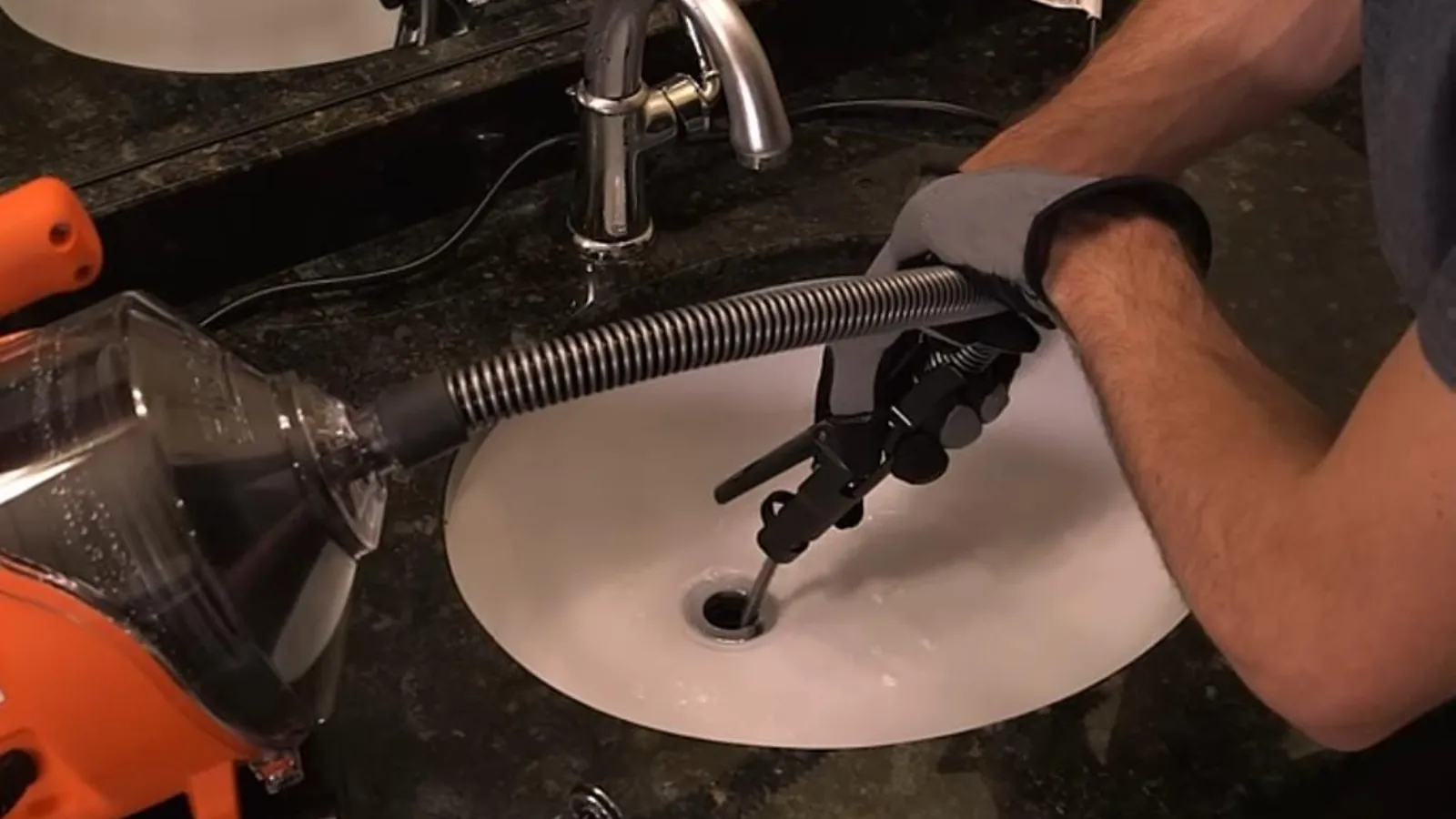
A snake is a coiled steel wire, often about a quarter inch thick and 25 feet long, turned by hand or by a small motor. It suits sinks, tubs and showers. The tip hooks hair or punches through a soft clog, and you pull the mess out or push it along. It is gentle on small pipe, but it cannot reach far and it cannot clear a 3-inch or 4-inch line.
Cabling uses a drum machine that spins a much heavier cable, commonly between 3/8 and 3/4 inch thick, through the bigger lines. Interchangeable heads cut roots, scrape grease off the pipe wall or retrieve a lump of something that should never have gone down. On the long end, a cable can travel 75 feet or more from a cleanout.
Both tools share a weakness. A cable punches a hole through a grease plug, and that hole can be the size of a pencil inside a pipe the size of a soup can. The opening can close again in weeks, which is why a line that clogs again soon after cleaning is a candidate for hydro jetting, which scours the whole pipe wall with water pressure.
Neither machine repairs anything. A cable that stops at the same spot every time is telling you about the pipe, not the clog: a dropped joint, a crack or a sag where water pools.
Kitchen sink clogs: grease, food scraps and the disposal
Kitchen drains clog differently from bathroom drains. Grease, coffee grounds, rice and starchy scraps cool and thicken in a 1.5-inch pipe, and the opening narrows from the walls inward. A double sink with a disposal has a short run to the wall, often just a few feet, then a longer horizontal run to the stack.
If both sides of a double sink fill, the blockage is past the tee where they join. If only the side without the disposal backs up, look at the dishwasher drain hose, which ties into the disposal. A dishwasher that leaves standing water after a cycle often has a clog in that same short run. A disposal that hums but does not spin is a different problem, covered under garbage disposal repair.
Hot water only moves grease further down the pipe, where it sets again. Wipe pans with a paper towel before washing and put the towel in the trash. If a kitchen sink is full of standing water and dinner is waiting, call the 24/7 line.
What to check before you call about a drain
A few minutes of observation helps the dispatcher send the right tools.
- Count the fixtures that are slow or gurgling and write down which ones.
- Look in the basement or crawl space for a capped cleanout, a 3-inch or 4-inch pipe with a square or round plug. Do not open it if water stands above the cap.
- Photograph standing water and the floor around it, in case a landlord or insurer asks.
- Note when it started and what ran just before, such as laundry or a full dishwasher.
- Try a plunger once on a single sink or tub with a wet rag in the overflow opening. If water does not move after a few firm strokes, stop.
- Tell the dispatcher if chemical cleaner went down the drain, so the plumber wears the right protection.
When several fixtures slow together, suspect the sewer line
A kitchen sink, a shower and the washer draining slowly in the same week is one problem, not three. The shared pipe is the main building drain and the sewer lateral that leaves the house, and a cable through the cleanout can often open it. The job has its own page on clearing a clogged main sewer line.
Ask the Middletown Water Department, which runs the town's sewer collection system, where the town sewer main ends and your lateral begins. Its number is 302-378-2211. Get that answer before you pay for work near the property line, because the dividing point decides who handles a blockage close to it. Townsend lists a different sewer provider, so plumbing help in Townsend starts with a different phone call.
If the main clogs again after cleaning, roots or a low spot in the pipe may be the cause. Pressure cleaning with a water jet clears more of the pipe wall, and a camera shows what the pipe itself looks like.
Shower and tub drains, and the drain line that leaks
Shower and tub clogs are mostly hair bound with soap scum, caught in the first foot or two below the strainer or at the trap. A plastic barbed strip or a hand auger often clears them. A heavy cable is the wrong tool in a 1.5-inch pipe.
A leaking drain line is a different problem, and cleaning does not fix it. Signs are a ceiling stain below a bathroom, a damp patch around a floor drain, or a stain that grows only after a certain fixture runs. A plumber can run water through one fixture at a time to see which one feeds the leak, then test the pipe before any repair.
Newer homes clog too
Middletown grew from 6,161 residents in 2000 to 23,192 in the 2020 census, so much of the housing dates from the 2000s building wave. In a house that young, a repeat clog is more often hair, grease, wipes or an uneven slope than a worn-out pipe, though that is a pattern and not a rule for any street.
The practical step: if a clog returns within a few months, ask for a camera look before agreeing to a replacement. Digging up a line that turns out to be sound is a costly way to learn that.
What changes the price of drain cleaning
Drain cleaning is priced by the job, because a bathroom sink and a 4-inch main line need very different effort.
Which line is blocked
A fixture trap takes less work than a branch, and a branch takes less than a main line that needs a larger machine.
Access to the pipe
A cleanout makes a long run simple. With no cleanout, the plumber may pull a toilet or work through a roof vent, which adds labor.
Length and size of the run
More cable, a bigger head or a longer path to the blockage means more time and wear on equipment.
The tool the clog demands
A hand auger, a drum cable and a water jet are different machines, and a hard grease or root clog can call for the heavier one.
What the plumber finds
A clean pass is a short visit. A broken pipe, a belly or a root mass leads to a camera look and a repair conversation.
Homeowners policies usually cover sudden and accidental water damage, not the cost of clearing a clog caused by ordinary use or wear. Some policies add a separate sewer or drain backup coverage. Read your policy or ask the insurer before you assume either way.
Call (410) 378-7601 and describe the drain, and you will get a clear price before work starts.
Drain Cleaning: Common Questions
Do you handle drain cleaning emergencies at night or on weekends in Middletown?
Yes. The 24/7 emergency line is answered at night and on weekends, and we send a licensed plumber with same-day appointments when available.
Tell the dispatcher how many fixtures are affected and whether water is coming up anywhere. Until the plumber arrives, stop using water in the house and keep people away from wet floors.
How do I know if I have a main line clog?
Several fixtures slowing or backing up at once is the sign. A floor drain that bubbles when you flush a toilet upstairs points the same way, and a plumber confirms it by cabling from the cleanout.
Can a clogged yard drain be cleared too?
Usually yes. A drain in a low spot of the lawn or at a window well can often be cabled or flushed with water. If it is packed with silt or leaves, the catch basin may need to be dug out by hand.
Why is my bathroom sink slow even after I cleaned the stopper?
The buildup is probably deeper, in the trap or the pipe behind it. Hair and toothpaste residue collect on the walls of a 1.25-inch drain, and a hand auger or trap cleaning usually reaches them.
Is chemical drain cleaner safe to use?
It is risky, so most plumbers advise against it. The liquid can sit in a fully blocked pipe, burn skin and eyes, and splash when the plumber opens a trap. Tell the plumber if any went down.
Why does my drain keep clogging every few weeks?
Something in the pipe is catching debris, such as grease on the wall, a root intrusion or a low spot. A cable opens a hole but may not clean the wall. A camera and pressure cleaning address the cause.
Can cleaning a drain damage the pipe?
A properly sized machine used on sound pipe does not. Very old, cracked or brittle pipe is a risk, which is why a plumber may stop and look with a camera when the cable catches at one spot.
What happens if the cable cannot get through?
The plumber stops and finds out why. A camera can show a collapsed section, a dropped joint or a hard blockage, and the next step may be a different tool or a repair rather than more cabling.
If a drain in your house is slow, gurgling or backing up, call (410) 378-7601 and describe what you see.
Standards and sources
Delaware's plumbing regulation, 16 Del. Admin. Code 4455, adopts the 2021 International Plumbing Code (IPC) with state amendments, and it is the baseline a licensed plumber works from when a drain job turns into a repair. Anyone can confirm a plumber's Delaware license at delpros.delaware.gov before work starts.