
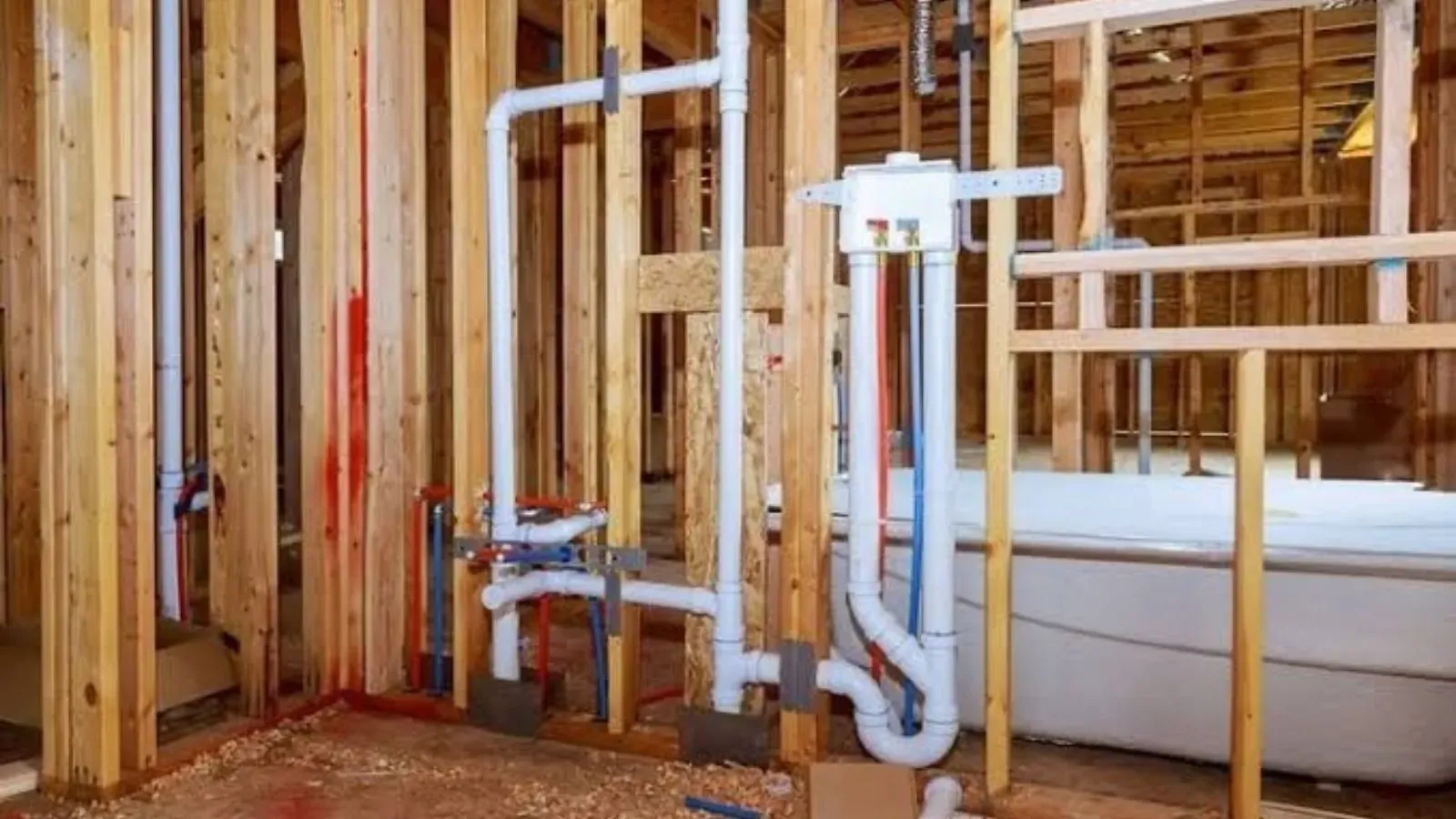
What each fixture install actually involves
Most installs look alike from the outside and differ underneath. This table shows what the plumber connects and what you can do to speed the visit.
| Fixture | What the plumber connects | What you should have ready |
|---|---|---|
| Kitchen or bath sink. | Hot and cold supplies, a drain trap, the faucet and a shutoff for each supply line. | The faucet and its parts in the box, and a cleared cabinet under the sink. |
| Toilet. | A supply line to the fill valve, a seal at the floor flange and the closet bolts. | The toilet model and the rough-in distance, measured from the finished wall to the center of the flange. Twelve inches is common. |
| Tub or shower. | The mixing valve, the drain, the spout or showerhead and a way to reach the valve from behind. | The valve trim kit, the base or tub, and a note on whether the wall opens from the back. |
| Laundry hookup. | Hot and cold washer valves, a standpipe drain and a box on the wall. | The washer model and a clear wall, since a standpipe often runs two inches in diameter. |
| Outdoor spigot. | A supply line through the exterior wall with a shutoff inside the heated space. | The exact spot you want it and a clear path to the wall from inside. |
A freeze-resistant spigot has a long stem so the actual valve sits inside the warm wall. That design matters because water expands about 9 percent when it freezes.
Swaps that look simple and are not
A new faucet turns into a bigger job when the shutoff valves under the sink will not close. Old valves can fail the first time they are turned in years, so a plumber tests them before taking anything apart and replaces them while the water is off.
Not every old fixture needs replacing. A toilet that runs is often a worn flapper or fill valve, and fixing the toilet you already have can be the smaller and cheaper job. A drip is often a worn cartridge, which a faucet repair for a dripping handle handles without a new unit.
If you have already bought the fixture, keep the box and the instructions. Missing parts are the most common reason an install stops partway.
Tubs and showers: the wall behind the fixture decides the job
A tub or shower swap rarely stops at the visible parts. The valve sits inside the wall at a set depth, the drain connects below the floor, and the tub or base must sit level on its support before any finish goes on. Plumbers set and test those connections before the surround covers them.
Tile, waterproofing and wall finishes are usually separate trades, so ask who owns each step. If you are converting a tub to a shower, a plumber needs to see the valve and the drain to say what the conversion involves.
Large soaker tubs can hold 60 gallons or more, which exceeds what many 40 or 50 gallon tank heaters store. If the new tub is big, ask about a water heater sized for the added demand before the tub is set.
Rough-in, inspection, trim-out: the order of a new install
These three phases explain why a new bathroom looks half-built for a while before it looks finished.
- LayoutFixture locations are marked on the floor and framing so supply, drain and vent paths can be worked out before anything is cut.
- Rough-inDrain, vent and supply pipes go into walls and floors, with stub-outs where fixtures will land. Nothing is closed up yet.
- InspectionIf the work is permitted, the town code official inspects each phase, and walls stay open until the inspector signs off.
- Close and finishDrywall, tile and flooring go in. These are other trades, and their schedule sets when the plumber returns.
- Trim-outToilets, faucets, valves and drains are set, then every connection is tested for leaks under working pressure.
Remodel rough-in: moving a sink or adding a bath
Moving a fixture means moving its drain, and drains must slope downhill the whole way. A kitchen sink shifted six feet across a room can collide with a floor joist or a duct, so a plumber looks at what runs below before promising a layout.
Venting is the other half. Each fixture needs air behind its water, and a new vent path through the wall or roof is sometimes the harder part of the plan. Ask early whether your new layout can use an existing vent or needs a new one.
A basement bath or any work under a slab adds a step, because the drain goes in before concrete covers it. Call 811 at least 48 hours before any outdoor digging.
New construction and additions
New construction plumbing starts at the ground, with drains and any water service set before the slab or floor system goes in. The plumber works around framers and inspectors, so call early, before the framing crew finishes, because pipes can usually be placed more cleanly in open walls.
An addition ties into the house you already have. Check that the main supply line, the water heater and the sewer connection can handle another bathroom or laundry before the framing is up. A single three-quarter inch supply feeding added bathrooms may deliver less flow at the shower than you expect.
When a job becomes a permit conversation
Adding drains, running new supply lines for a bathroom and anything under a slab are the jobs worth raising with the town before work starts. Permit rules vary, so ask the town permits office. Permits, Licensing and Inspections publishes a Plumbing Permit Application, a Drain and Vent Self-Certification Form and an Under-Slab Drain and Vent Self-Certification Form for work on or after 11-11-2019.
Each phase of permitted work is inspected by the town code official. Fees are not published on that page, so call 302-378-1171 (phone until 4:30 p.m., in person at Town Hall, 19 W. Green Street, 8 a.m. to 4 p.m.). Contractors doing building or reconstruction work must be licensed with the town, and Delaware requires a Delaware license for plumbing work.
What a homeowner should have ready
- The fixtures, parts and instructions, unpacked and checked against the packing list.
- Model numbers and measurements, including the toilet rough-in distance and the cabinet interior.
- A clear path to the work area and to the main water shutoff, which the plumber will close.
- Photographs of the space before work, useful for any later question about what was there.
- A note on which other trades are involved, such as tile, drywall or cabinetry, and their dates.
- Your answer from the permits office, or the question you plan to ask them.
- A plan for water use while the supply is shut off.
Why installs cluster in newer subdivisions and older blocks
Middletown grew from 6,161 residents in 2000 to 18,871 in 2010 and 23,192 in the 2020 census. Much of the housing came from that growth wave, so original water heaters, supply valves and fixtures are reaching replacement age. When you replace one, ask the plumber to look at the shutoff valves under it, since they are cheap to replace while the water is off.
The older plumbing is concentrated near the historic center around Main Street, where a fixture swap sometimes uncovers pipe that needs more than a new faucet. If a plumber opens a wall and the supply pipes themselves look corroded, that conversation is a repipe and not a fixture swap.
We also dispatch to Townsend, about 7 miles south on DE-71, and a licensed plumber for Townsend, DE handles the same range of installs.
What changes the price of an installation
Two installs of the same fixture can price very differently. These are the reasons.
Fixture and who supplies it
A basic faucet is quick work. A multi-head shower system with a thermostatic valve takes more time to set and test.
Condition of what is already there
Valves that will not close and corroded supply lines add work before the new fixture can go in.
Opening walls or floors
Running new lines through finished walls costs more labor than working in open framing.
New drains and vents
Moving a fixture means new drain and vent paths, and sometimes a new route through framing.
Permit and inspection steps
Permit paperwork and inspection timing can add visits, and the town does not publish fee amounts on its page.
Insurance generally does not pay for planned installations or upgrades. If a failed installation later causes sudden water damage, that is a separate question, so read your policy or ask your insurer.
To get the real number for your project, call (410) 378-7601 and tell the dispatcher what you are installing and where.
Plumbing Installation: Common Questions
Can I buy my own fixtures for the plumber to install?
Often yes, but ask when you call. A fixture missing parts or a model that does not fit the space can stall the job.
Keep the box, the template and the instructions where the plumber can find them.
How long does a plumbing installation take?
It depends on the job, and this page makes no promise. A faucet swap and a rough-in for a new bathroom are very different in scope.
Ask for the steps and which ones depend on inspection or other trades.
Do I need a permit to install a toilet or sink?
Permit rules vary, so ask the town permits office at 302-378-1171 before you decide.
The town publishes a Plumbing Permit Application and inspects each phase of permitted work. For a Townsend address, ask at the Townsend town hall.
What is the difference between rough-in and trim-out?
Rough-in is the pipework inside walls and floors, while trim-out is setting visible fixtures and testing them.
Inspection sits in between, so the walls stay open until the phase passes.
Can you turn my tub into a shower?
Often, though a plumber needs to see the valve, the drain and the wall before saying so.
Tile and waterproofing are usually separate trades, so ask who handles the finish work.
Who handles drywall, tile and painting after the plumbing?
Those are typically other trades, and the plumber does not patch or finish walls.
Line up your tile setter or drywall finisher so they can start when the plumber has finished and the inspection has passed.
Tell us what you want installed by calling (410) 378-7601, and a licensed plumber will plan the job with you.
Standards and sources
New installations follow 16 Del. Admin. Code 4455, which adopts the 2021 IPC with state amendments. The town publishes a Plumbing Permit Application and each phase of permitted work is inspected by the town code official. Call the permits office at 302-378-1171.