
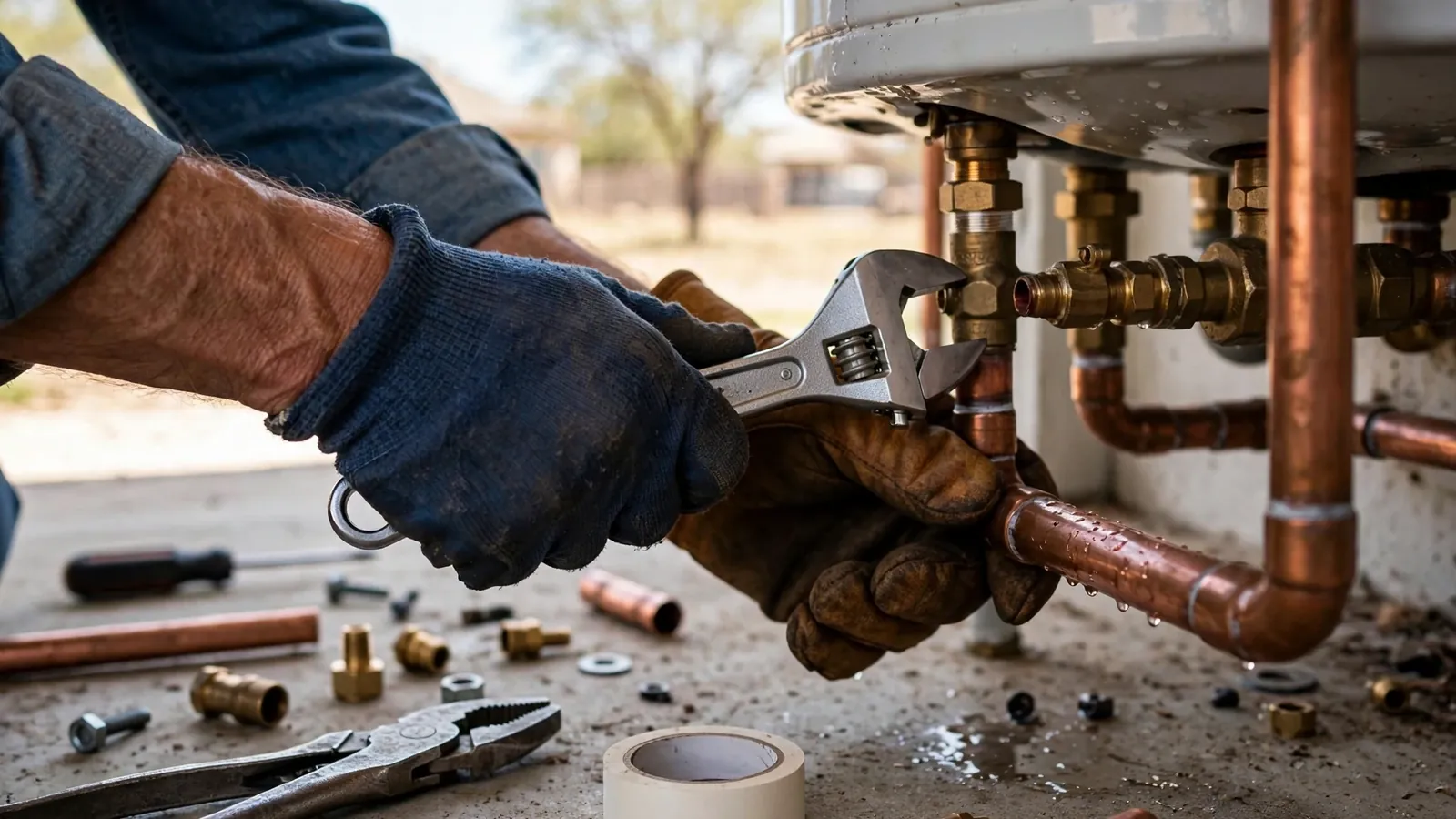
A leaking water heater cannot wait until morning
Many household tanks hold 40 to 50 gallons, and 50 gallons of water weighs about 417 pounds. When a seam or fitting lets go, that volume reaches drywall, baseboards and flooring fast. The emergency line is open 24/7, nights and weekends included, and we dispatch a licensed plumber and book a same-day appointment when one is available.
What to do while you wait
- Close the cold water supply valve on the pipe entering the top of the heater. A handle turned crosswise to the pipe means closed.
- On an electric heater, switch off its breaker before anyone stands in standing water. Never reach for a wet panel or cord.
- On a gas heater, turn the gas control to off only if the area is dry and you smell no gas.
- Stay clear of the relief valve discharge pipe. Water leaving it can be hot enough to scald.
- Move boxes, rugs and electronics off the floor, then photograph the water and the heater for an insurer or landlord.
Reading a leak: where the water shows up and what it means
Start with the place water first appears, not where it ends up. Water runs down the outside of a tank and pools far from its source.
| Where the water shows | Likely cause | What the plumber does |
|---|---|---|
| Puddle at the base, seam wet. | Corroded steel shell or failed glass lining. | Confirms the leak is the tank body, then sets up a replacement. |
| Drips at the pipe connections on top. | Loose or corroded fitting, or a worn flex connector. | Tightens or replaces the fitting and checks the shutoff valve. |
| Water from the relief valve discharge pipe. | Worn valve seat, or pressure and temperature running too high. | Tests pressure, checks for thermal expansion, replaces the valve if it is bad. |
| Drip from the drain valve at the bottom. | Worn seat or cracked plastic valve. | Swaps the valve for a new one and tests it under pressure. |
| Damp floor with a dry tank and pipes. | Condensation, or a leak elsewhere running to the heater. | Dries everything, then traces the water back to its real source. |
A leak that returns after you dry the area is a leak, not condensation.
Base and tank leaks: where repair stops making sense
A puddle under the heater deserves attention the same day. Before assuming the tank has failed, dry the floor and the lower jacket with a towel and watch where the first drops form. Condensation on a cold pipe, a weeping fitting above or a slow drain valve can all end up at the base, and each is a part-level fix.
A leak from the tank body is another matter. Inside, a steel shell wears a glass lining that keeps water off the metal, and once the lining cracks the steel rusts through. No sealant, patch or tightened bolt reverses that. A leaking tank means replacement, and many tank heaters reach that point somewhere around the ten-year mark.
If yours is that old, it helps to read about replacing a leaking tank before the plumber arrives, because the rating plate, tank size and fuel type all feed that decision.
Fittings, the relief valve and the drain valve
Fittings fail where two metals meet. A dripping connection on top is often a corroded nipple or a flex connector that has aged, and the repair is replacing that piece. A plumber also checks the shutoff valve upstream, since one that will not close fully makes every later repair messier.
The temperature and pressure relief valve sits on the side or top of the tank, with a discharge pipe running toward the floor. It opens when pressure or heat climbs too high. A steady drip from that pipe can mean a worn valve seat, but it can also mean thermal expansion is pushing pressure up, and a new valve alone then fixes nothing. Never cap the discharge pipe.
The drain valve near the bottom is often plastic on modern tanks and cracks or loses its seat after a few flushes. Replacing it is a small job as long as the tank is sound. A cap threaded onto the outlet holds for a night, but it is not a repair.
Cold showers and a heater that will not heat
Check the power source first: a tripped breaker on an electric unit, or the pilot and ignition on a gas unit. Then look at the thermostat, which is commonly set near 120 degrees F. If both look right and the water stays lukewarm, an electric heater may have a failed element or thermostat, and a gas heater may have a dirty burner or a worn thermocouple. Tell the dispatcher which fuel you have.
Electric, gas and hybrid tanks: what changes on a repair call
Electric tanks heat with two elements, one upper and one lower, each with its own thermostat. A burned-out lower element often means you run out of hot water quickly, while a failed upper one can leave you with none. Elements and thermostats are replaceable parts and the usual fix on these units. If the unit keeps failing, a tankless water heater is one alternative worth pricing.
Gas tanks add a burner, a pilot or electronic ignition, a gas control valve and a flue. Repairs there involve cleaning the burner, replacing a thermocouple or flame sensor, or swapping the gas control. If you smell gas, leave the building, call 911, then call your gas utility. Do not switch anything on or off on the way out.
Hybrid heaters pair an electric tank with a heat pump on top that pulls warmth from the surrounding air. They add a fan, a compressor, an air filter and a condensate drain, so a no-hot-water call may be a clogged filter or a blocked drain line. Some faults on these units need the manufacturer's service tools, and we will say so if yours does.
Scale and sediment settle in all three types. The town's water quality report lists no hardness figure, so nobody can predict how quickly your tank collects it from that report. Test your tap with a hardness kit, or ask the Middletown Water Department at 302-378-2211.
What to check and photograph before you call
At 2 a.m. a few quick observations save time later, and they help your insurer too.
- Which fuel runs the heater: electric, gas or a hybrid with a heat pump on top.
- Where the water first appears: tank seam, top pipes, side valve or bottom drain.
- Whether the relief valve discharge pipe is dripping or running.
- The rating plate, photographed in full, showing the model and serial number.
- Any rust streaks, scorch marks or crusted white mineral on fittings.
- Whether the cold supply valve closes fully when you turn it.
- What is wet nearby, such as drywall, a finished basement or stored items.
Boilers: what a plumber can look at and what needs a heating specialist
A boiler heats the house with hot water or steam sent through radiators, baseboard or floor loops, which makes it a different machine from a tank heater. A plumber can diagnose leaks, circulator pumps, valves and system pressure. Pressure that keeps dropping points to a leak somewhere in the loop, and a pump that hums without moving water points to the pump itself.
Some boiler problems belong to a heating specialist, especially burner and combustion work. We will tell you honestly if your job falls there instead of sending someone who cannot finish it. If a boiler is actively leaking, turn off its power switch and close the feed valve before water reaches the burner area.
Delaware rules and Middletown's aging heaters
Delaware's plumbing regulation (16 Del. Admin. Code 4455) adopts the 2021 International Plumbing Code with state amendments. Those amendments cover water heater piping, relief valves and expansion tanks. When a plumber replaces a relief valve or touches the piping, they are working in an area the state regulates, so ask which parts were changed.
Much of Middletown's housing comes from the 2000s growth wave, when the town grew from 6,161 residents in 2000 to 23,192 by the 2020 census. Original heaters in those homes are now reaching the age where a repair call can turn into a replacement decision.
If yours is original, ask the plumber to weigh both options out loud. Households in Townsend, about 7 miles south on DE-71, can read about plumbing help in Townsend to see how the same line covers them.
When a slow leak is hiding behind the heater
Sometimes the heater is innocent. A pinhole in a nearby supply line or a failed joint in the wall can drip onto the heater and look like a tank leak. If you dry everything and the water keeps coming from a pipe, the job is finding a hidden leak before the damage spreads.
A water meter test helps here: shut every fixture and see whether the dial still moves. A meter that keeps turning with the heater valved off points away from the tank.
What changes the price of a water heater repair
Two leaks that look identical can lead to very different bills. These are the factors a plumber weighs when giving you a clear price before work starts.
Which part failed
A drain valve or flex connector is a small repair. A gas control, a set of elements or a circulator pump takes more parts and more labor.
Fuel type and venting
Gas units involve the burner, the flue and combustion air, and hybrids involve a heat pump section. Each adds checks to the visit.
Age and condition of the tank
On an old tank, spending on a repair may not make sense if the shell is failing. The plumber tells you when a repair is likely to be wasted.
Access to the heater
A heater in a tight closet or crawl space takes longer to work around than one in an open basement.
Time of the call
After-hours emergency visits are priced differently from scheduled ones, and the plumber states the number before work starts.
Homeowner and renter policies often cover sudden and accidental water damage, such as a burst fitting, but they usually do not cover a heater that wore out. Your photos of the water and the unit help either way, so read the policy or ask your insurer how it treats a failed water heater.
Call (410) 378-7601 and describe the leak, and we will tell you how the price is worked out before anyone starts.
Water Heater Repair: Common Questions
Do you handle water heater repair emergencies at night or on weekends in Middletown?
Yes. The 24/7 emergency line is answered overnight and on weekends, and we dispatch a licensed plumber and offer same-day appointments when available. In the meantime, close the cold supply valve above the tank and cut power or gas as described above. If you smell gas, leave the building and call 911 first.
Can a leaking water heater be repaired?
It depends on where the water comes from. A leak at a fitting, the relief valve or the drain valve is usually a part-level repair. A leak through the tank body is not repairable, and the heater needs to be replaced.
Why is my water heater not heating?
The most common causes are a tripped breaker, a failed element or thermostat on an electric unit, and an ignition or thermocouple fault on a gas unit. Check the breaker or pilot first. If the fix is not that simple, a plumber can test the heating parts one at a time.
What should I do if my water heater floods the room?
Shut the cold supply valve on top of the heater, switch off the breaker if it is electric, and keep your feet out of standing water near outlets. Then photograph the damage and call for a plumber. Water extraction and drying may need a separate restoration company.
Is water coming from the relief valve pipe normal?
A brief burst when the heater is heating can happen, but steady dripping is not normal. It may point to a worn valve or to high pressure in the system. Do not cap the pipe, because that valve is the safety release for the tank.
Do you repair boilers as well as water heaters?
A plumber can diagnose boiler leaks, pumps, valves and pressure. Burner and combustion problems often need a heating specialist, and we will tell you honestly if yours does. That way you do not pay for a visit that cannot finish the job.
How do I know whether to repair or replace the heater?
Age, leak location and rust usually decide it. A tank leak or a heater well past ten years old leans toward replacement. A newer tank with a bad valve or element leans toward repair.
Is it safe to keep using a heater that drips?
A small drip from a valve or fitting can wait for a scheduled visit if you check it daily. A leaking tank should be shut off and drained. If you ever smell gas, leave the building, call 911 and then call the gas utility.
Still unsure what your heater needs? Call (410) 378-7601 and describe what you see.
Standards and sources
The state amendments to the 2021 International Plumbing Code (IPC) (16 Del. Admin. Code 4455) address water heater piping, relief valves and expansion tanks, so a weeping relief valve or a missing expansion tank is a code question and not only a comfort one.