
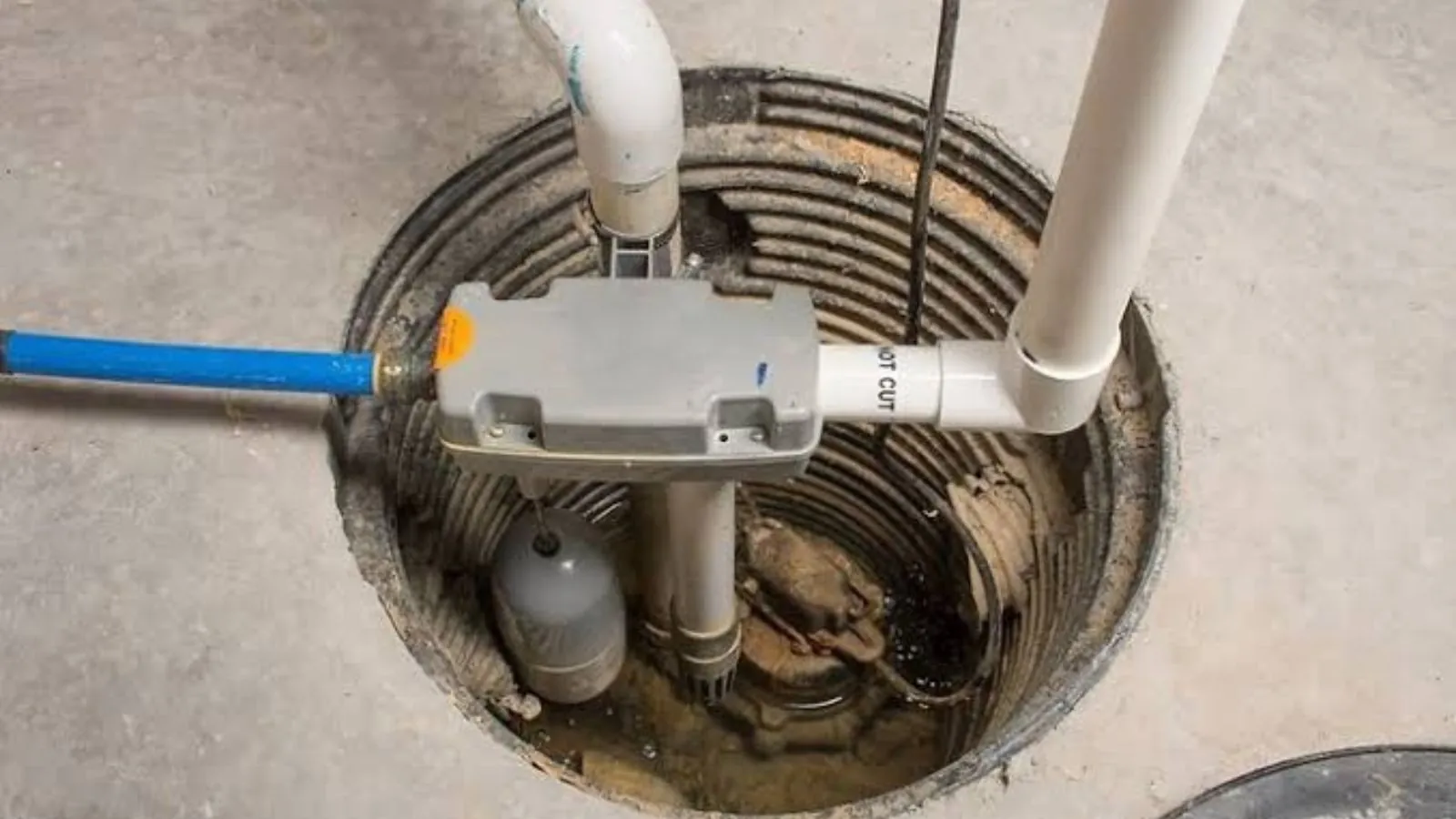
How the backup knows to take over
A standard sump pump sits in a pit about 18 inches wide and drops with a float switch. When water rises to the switch, the pump starts and sends water out a discharge pipe. A backup system adds a second, smaller pump mounted a few inches higher in the pit, wired to its own float.
If the primary pump fails or the power cuts out, water keeps rising until it reaches the second float. The backup pump then runs from a 12-volt deep-cycle battery through a controller that also charges the battery from household power. Because the backup starts higher, it is also a warning that something upstream went wrong.
Backup options and their trade-offs
Most homes choose between these three, and the right pick depends on how often the pit runs.
| Setup | How it works | Trade-off |
|---|---|---|
| Battery-powered second pump. | A separate DC pump on its own float, fed by a deep-cycle battery. | Simple and widely used, but runtime is limited by battery size, and a 12-volt battery needs replacing every few years. |
| Combination primary and backup unit. | Two pumps and a controller sold as one system. | Cleaner install and matched parts, but a failure may take the whole unit out. |
| Generator on a transfer switch. | Powers the main pump and other circuits during an outage. | Covers the whole house, but needs a person on site to start it, and fuel to run it. |
| High-water alarm only. | A float-triggered alarm with no second pump. | Warns you early, though you still need to do something about the water. |
A battery backup and a high-water alarm together give you both a second pump and a heads-up.
Why battery runtime is shorter than it sounds
A battery is rated in amp-hours, and the pump draws a set number of amps while it runs. A battery that could run a pump for hours of steady pumping may cover far less when the pit cycles hard, because each start draws a surge. In a long storm the pit may cycle every minute or two, and each gallon lifted weighs 8.34 pounds.
That math is why the pit's inflow rate matters more than the pump's rating. A lightly seeping basement may get a day or more from a backup, while a basement taking in a lot of water may get only hours. Deep-cycle batteries typically need replacement every few years, and a dead one looks fine until the first outage.
A quarterly test that catches most failures
Run this every 3 months, and again the day before a forecast storm.
- Pour 5 gallons into the pit and watch the main pump start, run, and shut off cleanly.
- Unplug the main pump, pour in another 5 gallons, and watch the backup start on its own float.
- Check the battery's two terminals for corrosion and the controller for a green charge light.
- Confirm the discharge pipe is clear and ends well away from the foundation.
- Check that the one-way check valve on the discharge snaps shut instead of letting water fall back into the pit.
- Listen for grinding or a pump that runs without moving water.
Where the pit and discharge can still fail you
A backup pump cannot move water through a blocked pipe. Frozen or crushed discharge lines are a common culprit, and water expands about 9 percent when it freezes, which can split a line holding standing water. A typical 1-1/2 inch discharge line should also end several feet from the foundation, or the water simply soaks back in. Debris in the pit can jam a float, so a full test includes lifting the float by hand.
If the main pump is noisy, short-cycles, or runs constantly, fixing it is cheaper than relying on the backup. Sump pump repair covers float switches, check valves and the pump itself, and it is a better first step than adding a second pump to a failing first one.
Adding a backup to an existing pit
Many pits can take a backup pump without new digging, but fit matters. The pit needs room for two pumps and two floats, and the discharge needs a tee with a check valve for each pump. A plumbing installation for the backup and its discharge is usually a short visit when the pit is large enough, and a bigger job when it must be widened.
If water seems to be coming in somewhere other than the pit, such as a wet wall or a damp floor slab, leak detection help can tell you whether the source is groundwater or a pipe. A backup pump will not help with a supply line leak.
Middletown, DE: groundwater depth varies lot by lot
The U.S. Geological Survey published a water-table, surface-drainage and engineering soils map of the Middletown area (Hydrologic Atlas 82, 1964). This page does not state what it says about depth, and nobody should guess it for your address. The useful lesson is that groundwater depth varies by lot, so a neighbor's dry basement tells you little about yours.
Watch your own pit through a wet spring. If it cycles often after a rain, treat a backup as close to required. If it stays quiet for months, a backup is lower on the list, though a plumber or drainage specialist should still look at the basement before you decide.
Source type: USGS Hydrologic Atlas 82 (1964).
Questions Middletown homeowners ask
How long does a sump pump battery backup run?
It depends on the battery size and how often the pit cycles. A light inflow can give many hours, while a heavy storm can drain the battery in a few.
Ask for the amp-hour rating and the pump's amp draw, and compare them to how fast your pit fills.
Does a battery backup replace my main sump pump?
No. It is a lower-capacity pump meant for a short outage or a main pump failure, and it will not match the main pump's flow for long.
Keep the main pump in working order.
How often should I replace the backup battery?
Many deep-cycle batteries need replacement every few years, and sooner if they are drained often. Test it each season and replace it if it holds a charge poorly.
Do I need a backup if my pit rarely runs?
Probably not at first, but a rarely used pit can fail unnoticed. A seasonal test and a high-water alarm are a low-cost way to catch a problem before a storm.
Can I install a sump pump battery backup myself?
A handy homeowner can set up a kit if the pit has room. The harder parts are the discharge connection, the check valves and the wiring, and a mistake there can cause a flood in the moment you need the pump.
A licensed plumber can check the pit and the discharge line.
How do I decide whether I need a backup in Middletown?
Watch your own pit through a wet season, because depth to groundwater differs from one lot to the next. A neighbor's dry basement says little about yours.
If your pit cycles often after rain, plan a backup. If it stays quiet for months, a seasonal test and an alarm may be enough.
The short version
A battery backup buys you hours, not days, and it only helps if the pit, float, check valve and discharge are all working. Test the whole chain each season and treat a noisy primary pump as a repair first.
To have a licensed plumber look at your pit, call (410) 378-7601. We also dispatch to Townsend and throughout the service area.
Standards and sources
Pump and discharge plumbing falls under 16 Del. Admin. Code 4455, the Delaware regulation based on the 2021 IPC.